

Main Line Home Additions:
What Adds Value (and What Hurts Resale)
Summary
On the Main Line, additions and renovations can absolutely boost resale value, but only when they match what buyers actually pay premiums for in 2026. The Main Line buyer is usually not just buying square footage. They are buying daily function, school district confidence, neighborhood feel, and long-term resale stability. That means the “best” addition is rarely the biggest one. It is the one that makes the home easier to live in and easier to say yes to.
This guide breaks down the additions that tend to add the most value in Main Line towns like Wayne, Devon, Berwyn, Bryn Mawr, Villanova, Haverford, Ardmore, and Narberth, and the additions that commonly hurt resale by creating layout weirdness, appraisal complications, or buyer uncertainty. I’ll also include practical guidance on permits and township considerations, because on the Main Line, documentation is part of value.
⸻
Table of Contents
1.How Main Line buyers think about value in 2026
2.The additions that usually add the most resale value
3.Additions that can add value, but only in the right house
4.Additions that commonly hurt resale
5.The “permit and documentation” factor
6.How to decide what to do on your specific home
7.Final takeaways
⸻
1. How Main Line buyers think about value in 2026
The Main Line is not one market. Ardmore and Narberth behave differently than Villanova or Gladwyne. A twin near Suburban Square draws a different buyer than an estate-style property in Radnor Township. But there is a consistent pattern: Main Line buyers pay for function, predictability, and quality.
In practical terms, the upgrades that move value are the ones that solve real problems. Think of the things buyers complain about when they walk through older homes in Lower Merion, Radnor, and Tredyffrin Easttown: no mudroom, tight kitchens, awkward first-floor flow, not enough closets, unfinished basements, and no true primary suite. Those pain points get priced into offers.
Lifestyle anchors intensify this. Walkability near Suburban Square in Ardmore, proximity to SEPTA stations along the Paoli Thorndale line, and the ability to be in Wayne’s Lancaster Avenue corridor quickly all shape what buyers will pay. Buyers want a home that fits their routine and feels like it belongs on the street.
⸻
2. The additions that usually add the most resale value
These are the “high confidence” additions I see pay off most often in the Main Line, especially in the 800k to 2M range where buyers are selective and expect a certain level of function.
A real mudroom, not a coat rack
Older homes often lack a true transition space. A mudroom with storage, bench seating, and an intentional drop zone can change the feel of the entire house. In family-heavy pockets of Radnor, Tredyffrin Easttown, and Lower Merion, this is not a luxury. It is a daily-life upgrade.
A primary suite that feels like a primary suite
A true primary suite usually means a bedroom that can hold a king bed comfortably, a bathroom that feels updated and functional, and closet space that does not feel like an afterthought. Adding or improving a primary suite can be a major value driver in older Main Line homes where the bedroom sizes were built for a different era.
A kitchen expansion that improves flow
Kitchens sell homes, but on the Main Line, buyers are also sensitive to “renovation that doesn’t match the house.” The best kitchen additions are the ones that improve flow and function without making the home feel like a patchwork. Opening a wall, adding a small breakfast nook, or creating a better connection to a family room can be more valuable than simply adding square footage.
Finished basements with purpose
Finished basement value is highest when it reads as usable space, not just carpet and recessed lights. In 2026, buyers want one or two of these: a home office, a gym, a playroom, a guest suite, or a media room. In towns like Wayne, Bryn Mawr, and Villanova, a well-finished basement can be a major differentiator because it expands the home’s functional footprint without changing the exterior.
Second floor laundry, when it’s done correctly
This sounds boring, but buyers love it. The key is making it feel intentional and quiet. A second-floor laundry solution is especially valuable in homes where the current laundry is in a dark basement and the buyer is thinking about the daily routine immediately.
⸻
3. Additions that can add value, but only in the right house
These are additions that can work well, but they depend heavily on the home, the street, and the buyer pool.
Home offices and “flex rooms”
In 2026, home office space still matters, but buyers want it integrated logically. A good home office has privacy and natural light. A bad office is a chopped-up dining room that ruins the first floor flow. In walkable Ardmore and Narberth, where buyers already trade some space for location, a smart office nook can be enough. In larger homes in Villanova or Devon, buyers will expect a full office.
Three car garages and oversized garages
Garages matter, but the value depends on the street and the neighborhood norm. In certain Main Line pockets, an oversized garage can be a premium. In others, it can feel out of scale and trigger zoning and permit complexity. In towns with tighter lots and older homes, adding a two-car garage may be more realistic and still very valuable.
Outdoor living rooms
Patios, covered porches, and outdoor kitchens can be great, but only when they feel like a natural extension of the home and are appropriate for the lot. A well-designed outdoor space can be a premium feature in areas where buyers prioritize entertaining, but it rarely covers the cost if it is overly custom or high maintenance.
⸻
4. Additions that commonly hurt resale
On the Main Line, resale damage usually comes from additions that create uncertainty or weirdness.
Additions that destroy flow
If an addition creates a maze-like floor plan, buyers feel it instantly. They may not be able to articulate it, but they will discount it. Common offenders are poorly integrated family room additions or awkward kitchen expansions that create dead space.
Overly personal custom features
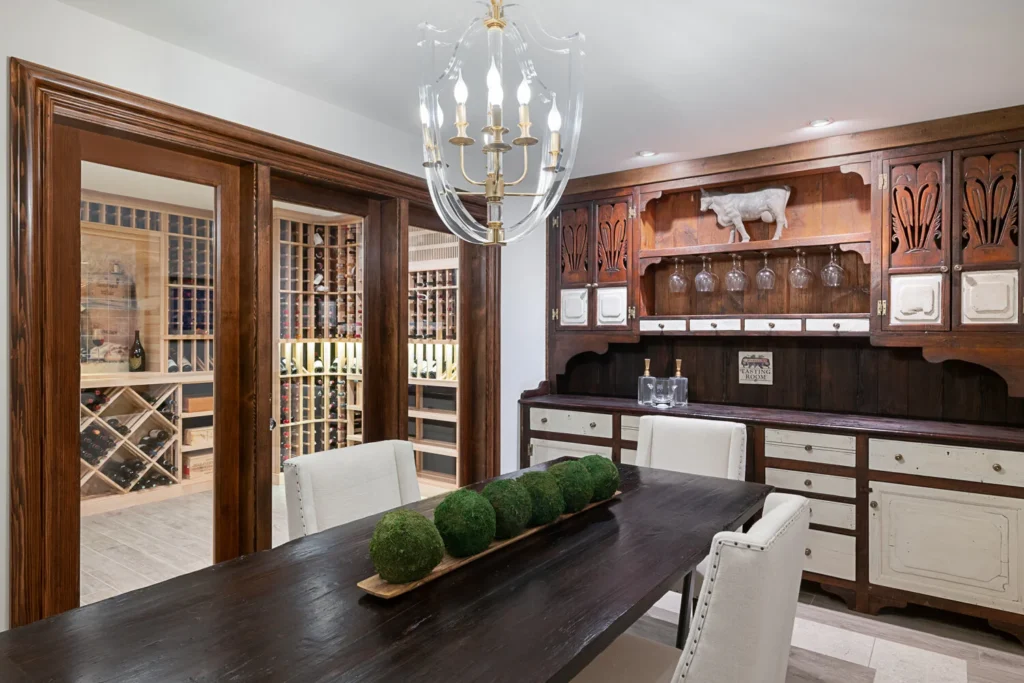
Wine cellars, extreme built-ins, highly themed rooms, and unusual layouts can narrow your buyer pool. This does not mean you cannot do what you love. It means you should assume resale will be more sensitive.
Conversions that reduce bedroom count
Turning a bedroom into a giant closet or expanding a primary suite at the expense of a bedroom can hurt resale in family-heavy neighborhoods. Bedroom count still matters in many price bands.
Unpermitted work or unclear documentation
Nothing creates buyer fear faster than “we don’t have paperwork.” Buyers do not want to inherit municipal risk, insurance issues, or appraisal uncertainty. Documentation is part of value on the Main Line.
⸻
5. The “permit and documentation” factor
Main Line buyers are sophisticated, and so are their inspectors. If you do a meaningful addition, you want clear documentation: permits, contractor invoices, and a basic record of what was done. This is especially true in townships where buyers are used to a high standard of compliance and resale expectations.
Even if the work is excellent, missing documentation introduces uncertainty, and uncertainty invites negotiation.
⸻
6. How to decide what to do on your specific home
Here is the framework I use with sellers.
First, identify the biggest buyer friction points in your current home.
Second, compare your home to what else buyers can buy on your street and in your school zone.
Third, choose the smallest set of improvements that will expand your buyer pool meaningfully.
Fourth, make sure the improvements match the neighborhood norm. A home should feel upgraded, not out of place.
For example, if you are in Devon or Berwyn and buyers are paying premiums for functional, move-in ready homes near the train, then a well-executed kitchen and primary suite improvement may be the best use of money. If you are in Ardmore near Suburban Square, buyers may prioritize walkability and low maintenance, and an expensive outdoor build may not pay back.
⸻
7. Final takeaways
The best Main Line additions are the ones that improve daily function and reduce buyer uncertainty. Mudrooms, primary suites, kitchen flow improvements, finished basements with purpose, and second-floor laundry often add real value. Additions that disrupt flow, reduce bedroom count, feel overly custom, or lack documentation commonly hurt resale.
If you are considering an addition and want a “resale-first” plan based on your exact town, street, and price band, I can help you prioritize the improvements that will actually move the needle in 2026.
Eric Kelley, Philadelphia Suburbs Realtor & Attorney