

Luxury Renovation ROI on the Main Line
Summary
Luxury renovations on the Main Line can absolutely increase a home’s value—but the return on investment (ROI) is rarely “dollar for dollar,” and the projects that feel expensive are not always the projects that add the most resale value. In 2026, buyers in Main Line towns like Wayne, Bryn Mawr, Villanova, Haverford, Ardmore, and Gladwyne are highly sophisticated. They pay premiums for turnkey homes, but they also discount over-customization, awkward layouts, and renovations that don’t match the micro-market.
This guide explains which luxury renovations tend to produce the strongest ROI on the Main Line, which upgrades often underperform, and how sellers can decide what’s worth doing before listing.
⸻
Table of Contents
1.Why Main Line Renovation ROI Works Differently
2.The “Turnkey Premium” in 2026
3.Highest-ROI Luxury Renovations
4.Renovations That Often Underperform
5.Historic Homes vs. Modern Homes: Different ROI Rules
6.Neighborhood and Price Band: Why ROI Changes by Town
7.Timing: Renovate Now or Sell As-Is?
8.A Practical Pre-Listing Renovation Checklist
9.Final Takeaways
⸻
1. Why Main Line Renovation ROI Works Differently
The Main Line is not a generic suburban market. Value is driven by:
•School district reputation (Lower Merion, Radnor, etc.)
•Micro-location (walkability, street feel, rail access)
•Historic architecture and established neighborhoods
•Limited inventory and constrained new construction
Because these fundamentals already support pricing, renovations on the Main Line typically do one of two things:
1.Increase the buyer pool (more people willing to bid)
2.Increase the sale price (buyers pay more for certainty)
The best renovations usually do both. The worst renovations increase cost without increasing demand.
⸻
2. The “Turnkey Premium” in 2026
In 2026, the turnkey premium remains real—especially for buyers relocating from NYC or DC, dual-income households with limited time, and families who don’t want renovation risk.
Turnkey homes tend to:
•Sell faster
•Command higher price-per-square-foot
•Receive stronger first-weekend activity
•Face fewer inspection-driven renegotiations
But “turnkey” means more than cosmetic finishes. Buyers want a home that feels low risk: clean inspections, modern systems, functional layout, and high-quality execution.
⸻
3. Highest-ROI Luxury Renovations
These are the upgrades that tend to produce the strongest ROI in Main Line luxury resale—because they reduce risk, improve daily function, and align with buyer expectations.
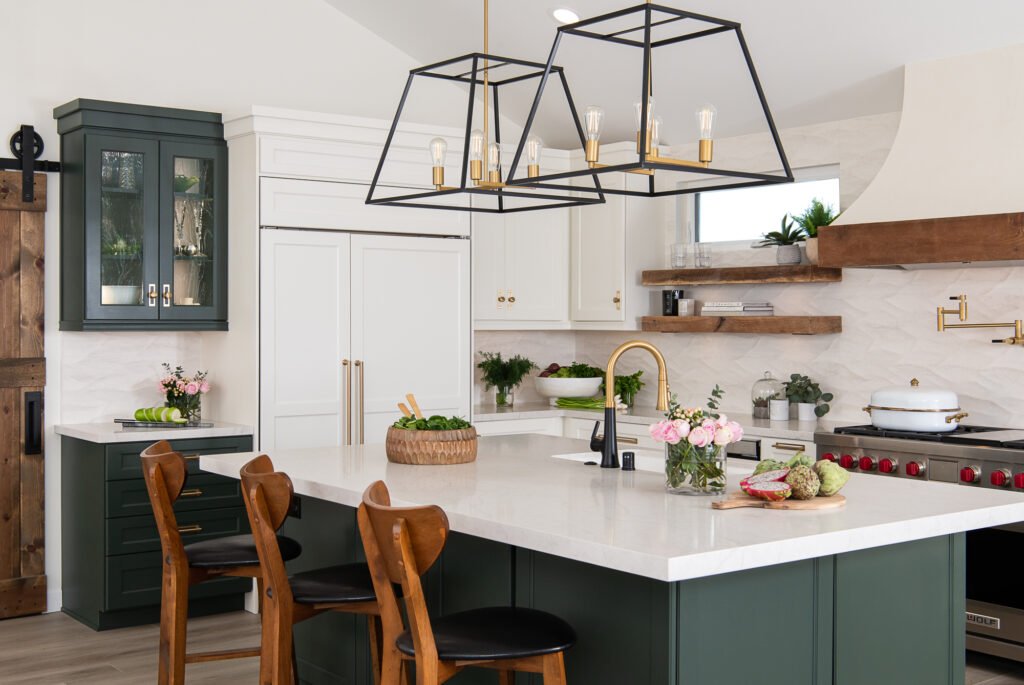
A) Kitchen Updates (But Only If Done Correctly)
High ROI traits:
•Functional layout, good flow, strong lighting
•Quality cabinetry and appliances appropriate to the price band
•Clean, cohesive design (not trend overload)
Low ROI mistakes:
•Over-customization that narrows appeal
•Wild stone selections or “Instagram-only” design choices
•Poor layout even with expensive finishes
B) Primary Suite and Bathrooms
Luxury buyers pay for comfort and convenience. Strong ROI features include:
•Spacious primary bath with modern finishes
•Walk-in closet systems
•Thoughtful lighting and ventilation
•Heated floors can add perceived value in premium segments
C) Mechanical Systems and “Invisible” Upgrades
Some of the best ROI improvements are not glamorous:
•HVAC modernization
•Updated electrical capacity
•Roof repairs/replacements
•Window condition and weatherproofing
Buyers may not “pay for it” line by line—but they pay for the confidence that the home won’t become a project.
D) Finished Basements and Bonus Spaces
Hybrid work keeps this high ROI, especially in:
•Wayne
•Villanova
•Bryn Mawr
•Haverford
Buyers value:
•Home office potential
•Gym space
•Media rooms
•Guest suites
E) Curb Appeal and Exterior Presence
Main Line buyers care deeply about:
•Landscaping and mature plantings
•Exterior paint and masonry condition
•Entryway presence
This is especially true in historic neighborhoods where first impression sets the perceived value ceiling.
⸻
4. Renovations That Often Underperform
These projects can be expensive and emotionally satisfying—but frequently underperform on ROI.
A) Overly Custom High-End Finishes
If you renovate for your taste rather than broad buyer appeal, you can shrink your buyer pool. Luxury buyers will pay for quality—but they don’t want your personality imposed on the home.
B) Overbuilding for the Street
Main Line markets are micro-location driven. If you turn a $1.4M neighborhood into a $2.2M home without strong comps, you may create a valuation ceiling problem.
C) Pool Installations (Mixed ROI)
Pools can be a strong lifestyle asset in some segments, but ROI varies heavily by:
•Township
•Lot size and privacy
•Maintenance perceptions
•Buyer demographics
A pool may help marketability, but it doesn’t always add proportionate value.
D) Major Additions Without Layout Intelligence
Adding square footage is expensive. If it doesn’t improve flow, it can underperform. Buyers pay for a home that lives well, not just a bigger number.
⸻
5. Historic Homes vs. Modern Homes: Different ROI Rules
Historic Main Line homes—stone Colonials, Tudors, and estates—require a different renovation lens.
In historic homes, high ROI upgrades often include:
•Restoring and preserving key architectural elements
•Modernizing systems quietly without destroying character
•Improving kitchen function while respecting style
•Adding discreet bathrooms or mudrooms
Biggest risk:
Over-modernizing in a way that removes the home’s identity. On the Main Line, character is part of the value proposition.
⸻
6. Neighborhood and Price Band: Why ROI Changes by Town
Renovation ROI depends on where the home sits in its local price band.
•In Ardmore and walkable pockets, buyers pay premiums for turnkey convenience.
•In Gladwyne, acreage and privacy can matter more than interior trends.
•In Haverford, architectural integrity and lot presence influence buyer perception heavily.
•In Wayne, “walk-to-town” convenience and family-friendly layouts drive premiums.
The same renovation may perform differently in Villanova than it does in Bryn Mawr, because buyer expectations differ slightly.
⸻
7. Timing: Renovate Now or Sell As-Is?
The decision often comes down to a simple question:
Will this renovation increase your buyer pool enough to justify time and cost?
If your home is:
•Dated but structurally solid
•In a prime micro-location
•Likely to attract renovation-capable buyers
…selling as-is may make sense.
If your home is:
•In a competitive price band
•Likely to attract relocators
•Likely to be compared to turnkey comps
…strategic renovations can pay off.
In 2026, buyers are more renovation-averse, which often favors targeted upgrades.
⸻
8. A Practical Pre-Listing Renovation Checklist
If you’re planning to sell within 6–12 months, prioritize:
1.Fix major mechanical and visible deferred maintenance
2.Improve kitchen and primary bath presentation (if needed)
3.Paint and lighting (high ROI, low cost)
4.Landscaping and exterior first impression
5.Declutter and stage to emphasize layout and light
Avoid:
•Full gut renovations unless you know your comps support it
•Over-custom designs that narrow appeal
•Adding square footage without clear demand
⸻
9. Final Takeaways
Luxury renovation ROI on the Main Line is about strategy, not spending. The renovations that perform best are those that reduce buyer risk, improve daily function, and align with local expectations in towns like Wayne, Bryn Mawr, Villanova, Haverford, Ardmore, and Gladwyne.
In 2026, the winning approach is targeted: make the home feel turnkey, preserve character where it matters, and avoid overbuilding beyond the neighborhood’s natural ceiling.
⸻
Eric Kelley, Philadelphia Suburbs Realtor & Attorney