

Renovated vs. Original Main Line Homes:
What Buyers Pay For (and What They Ignore)
Summary
On the Main Line in 2026, the gap between renovated and original homes is still real, but it is not as simple as “updated always wins.” Buyers pay premiums for homes that feel low risk and easy to live in, especially in high-demand school districts like Lower Merion, Radnor, and Tredyffrin Easttown. At the same time, plenty of buyers still want character, lots, and streets that can’t be replicated. That is why some original homes sell quickly and some renovated homes sit. The deciding factor is usually not the renovation itself. It is whether the home offers the right combination of layout, systems confidence, and neighborhood fit for the price band.
This guide explains what Main Line buyers typically pay more for in renovated homes, what they are willing to tolerate in original homes, and how to evaluate both intelligently in towns like Wayne, Bryn Mawr, Haverford, Ardmore, Villanova, Devon, and Berwyn.
⸻
Table of Contents
- Why the renovation premium exists in 2026
- What buyers pay a premium for in renovated Main Line homes
- What buyers ignore or discount even in “nice” renovations
- When original homes win and why
- The deal breakers in older Main Line housing stock
- A practical decision framework for buyers
- Seller strategy: how to price and position renovated vs original
- Final takeaways
⸻
1. Why the renovation premium exists in 2026
Most Main Line buyers are not afraid of older homes. They are afraid of uncertainty. In 2026, that uncertainty feels more expensive because buyers are more monthly-payment conscious and more sensitive to surprise repair costs. A renovated home feels like fewer unknowns. That translates into stronger demand and, often, higher list-to-sale ratios for the best homes.
This is especially true in move-up family price bands where buyers are juggling school timing and busy schedules. Buyers in Wayne, Bryn Mawr, and Haverford often want to move in quickly and stabilize their routine. Renovated homes offer that promise, and buyers pay for it.
But the premium is not automatic. Buyers will still punish a renovated home that feels overpriced, poorly executed, or mismatched for the neighborhood.
⸻
2. What buyers pay a premium for in renovated Main Line homes
Functional, modern flow
A renovation that improves flow is usually worth real money. Many older Main Line homes have chopped-up first floors, narrow kitchens, and awkward transitions between dining, living, and family space. When a renovation opens the space thoughtfully and creates a natural everyday layout, buyers respond immediately.
A true primary suite
Primary suites are one of the biggest “value levers” on the Main Line. Buyers will pay a premium for a primary bedroom that fits a king comfortably, has a bathroom that feels current, and has closet space that does not feel like an afterthought. In original homes where primaries feel tight or bathrooms are dated, buyers often mentally discount the home before they even look at comps.
Systems confidence
Smart buyers ask about roof age, HVAC age, electrical service, windows, and water management. A renovated home that also addresses systems, not just finishes, is the one that earns the true premium.
If a home looks renovated but the mechanicals are old, it often becomes a negotiation target after inspection. The best renovated listings in Radnor, Lower Merion, and Tredyffrin Easttown are the ones that feel “finished and maintained,” not just staged.
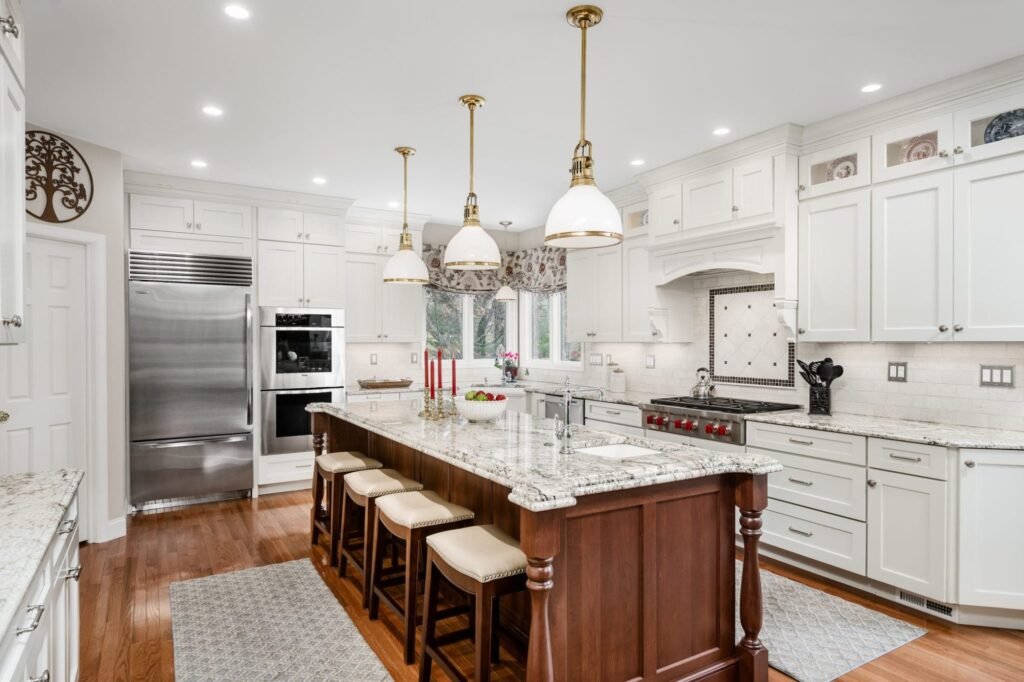
Kitchens that feel practical, not trendy
In 2026, buyers want kitchens that function. They care about storage, workspace, seating, and lighting. They like quartz and modern finishes, but they care more about whether the kitchen works for a busy weekday morning. A renovation that improves function tends to outperform a renovation that chases style.
Finished basements that read as real living space
A finished basement is valuable when it feels like a bonus family room, office, gym, or guest space, not just a dark carpeted area. On the Main Line, buyers often use finished basements for hybrid work, kids space, or entertaining overflow. When done well, this can be a real differentiator under $1.5M.
⸻
3. What buyers ignore or discount even in “nice” renovations
Overly custom design choices
Some renovations are beautiful but narrow the buyer pool. Highly specific tile, bold built-ins, and unusual layouts can reduce demand. Buyers may admire it, but they may not pay for it.
Cosmetic flips without substance
Buyers are getting better at spotting “lipstick renovations.” New paint, new light fixtures, and a staged look can create a strong first impression, but if the roof is old or the basement shows moisture, buyers revert to risk mode quickly.
Over-renovation relative to neighborhood norms
On the Main Line, neighborhood norms matter. If a renovation creates a home that feels out of scale for the street or priced far above the normal buyer pool for that pocket, it may sit. Buyers want to feel like they are buying the best home on a good street, not the most expensive home by a wide margin.
Layout that looks open but lives poorly
Not every open concept works. Buyers will ignore a renovation that removed too many walls if it makes furniture placement awkward or removes quiet zones. In family-heavy neighborhoods, buyers still want a place where kids can be loud and adults can talk.
⸻
4. When original homes win and why
Original homes can outperform renovated homes when they offer something rare that renovated homes cannot replicate.
Street and micro-location
A quiet, walkable street near Wayne’s town center, proximity to Suburban Square in Ardmore, or a high-demand pocket in Bryn Mawr can beat a more renovated home on a busier road. Buyers pay for location confidence.
Lot quality
Many original homes sit on better lots with mature trees and established landscaping. That “feel” matters. Buyers in Haverford and Villanova often value privacy, yard usability, and neighborhood character, even if the interior is dated.
Architectural character
Stone homes, classic colonials, and historic detail still drive demand. Buyers will accept dated finishes if the bones feel right and the pricing reflects the work.
Value opportunity
Original homes can be the best way to “buy the neighborhood” without paying the turnkey premium. For buyers who have renovation tolerance, this can be a smart path to long-term upside.
⸻
5. The deal breakers in older Main Line housing stock
If you are buying original, there are a few issues that are more than cosmetic.
Water and moisture problems that suggest ongoing intrusion
Major foundation concerns
Old electrical that creates safety or insurance issues
Septic or sewer issues where applicable
Layout issues that cannot be fixed without major structural work
Original does not mean risky, but you want to separate “dated” from “problem.”
⸻
6. A practical decision framework for buyers
Here is the framework I use with clients deciding between renovated and original.
First, decide your priority: ease or upside
If you need ease, pay for turnkey but verify systems.
If you want upside, focus on location and bones.
Second, audit the renovation quality
Ask what was done, when, and whether systems were addressed.
Third, compare micro-location, not just the house
A less renovated home in a better micro-location can be the smarter buy.
Fourth, model your true renovation budget
Many buyers underestimate the cost and timeline. Be honest.
⸻
7. Seller strategy: how to price and position renovated vs original
If you are selling renovated, your strategy is to justify the premium with documentation. Show buyers the systems work, not just the finishes. Present it cleanly and price within a search bracket that captures demand.
If you are selling original, you need to sell the value story: location, lot, schools, and character. You also need to be realistic on price. The biggest mistake original-home sellers make is pricing like a renovated home. Buyers will not do that math for you.
⸻
8. Final takeaways
Renovated homes earn premiums on the Main Line when they improve flow, primary suite function, and systems confidence. Original homes win when they offer superior micro-location, lots, and character, and when they are priced honestly relative to work required. In 2026, the smartest buyers and sellers think in terms of risk, routine, and resale confidence, not just “updated versus not.”
If you want help evaluating a specific home or positioning your own home for sale, I’m happy to give you a clear read based on the town, the street, and the price band.
Eric Kelley, Philadelphia Suburbs Realtor & Attorney