

Devon and Berwyn Real Estate:
Why the “Paoli Line Pocket” Commands a Premium
Summary
Devon and Berwyn are two of the most consistent “premium pockets” on the Main Line, and they stay that way for a reason. Buyers are not just paying for a town name. They are paying for a rare combination: strong school district reputation, a convenient commuter rail corridor, and a neighborhood feel that is both classic and livable. In 2026, when buyers are more selective, Devon and Berwyn still attract deep demand because they offer what many move-up families and relocators want most: long-term stability with day-to-day ease.
This guide explains what drives value in Devon and Berwyn, how the Paoli Thorndale rail line shapes demand, and why micro-location within these areas matters more than outsiders realize. I will also tie the conversation to lifestyle anchors and the kinds of homes buyers pay premiums for in this pocket.
⸻
Table of Contents
1.Where Devon and Berwyn fit on the Main Line map
2.The “Paoli Line premium” and commuter optionality
3.School district reputation and buyer confidence
4.Housing stock, lot quality, and what sells fastest
5.Walkability, lifestyle, and local anchors
6.Micro-location realities: roads, noise, and resale
7.Buyer strategy in 2026
8.Seller strategy in 2026
9.Final takeaways
⸻
1. Where Devon and Berwyn fit on the Main Line map
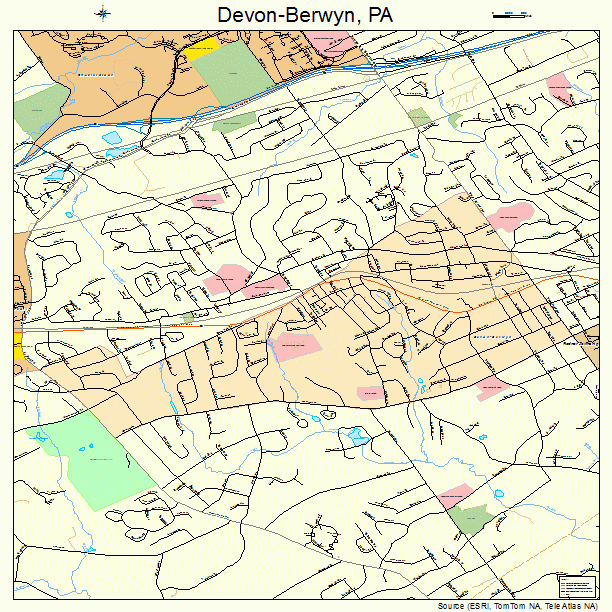
Devon and Berwyn sit in a sweet spot of the Main Line where buyers feel they have access without feeling crowded. They are close enough to Wayne’s amenities, close enough to the broader Main Line retail and dining corridor, and positioned for practical access to Route 202 and major employment nodes like King of Prussia.
For many buyers, Devon and Berwyn are a “best of both worlds” option. They get the Main Line identity, but with a slightly more residential, less hectic feel than some closer-in pockets.
⸻
2. The Paoli Line premium and commuter optionality
Even in a hybrid work world, commuter optionality matters. Devon and Berwyn benefit from proximity to SEPTA’s Paoli Thorndale line, and that proximity creates a premium for certain micro-locations. Buyers may not commute daily, but they want the ability to get to Center City without building their life around driving.
This also matters for resale. A future buyer may value rail access more than you do. In real estate, optionality tends to protect demand.
⸻
3. School district reputation and buyer confidence
A major driver of demand in this pocket is school district confidence. Buyers in 2026 still pay for perceived long-term stability. Families prioritize resale confidence as much as the current school experience. That is why buyers are willing to stretch in areas associated with top district reputations.
School-driven demand is also sticky. Even when interest rates change, there is always a pipeline of families who want to be in this corridor before the next school year.
⸻
4. Housing stock, lot quality, and what sells fastest
Devon and Berwyn offer a mix of classic Main Line colonials, stone homes, and updated properties with a traditional neighborhood feel. What sells fastest tends to share common traits.
Homes with functional layouts and a true primary suite
Homes with updated kitchens that do not feel overly trendy
Homes with clean basements and good water management
Homes that feel move-in ready, even if they are not brand new
In 2026, buyers still pay premiums for turnkey. The best homes in this pocket often sell quickly because buyers know inventory is limited and alternatives are scarce.
⸻
5. Walkability, lifestyle, and local anchors
Devon and Berwyn are not as intensely walkable as Ardmore or Narberth, but they still offer strong lifestyle access. Buyers like being near Wayne’s dining and shopping corridor, near the broader Main Line amenities, and within easy reach of parks and trails.
In terms of everyday life, many buyers spend time in nearby hubs for dining, errands, and family activities. The result is a lifestyle that feels suburban but not isolated.
⸻
6. Micro-location realities: roads, noise, and resale
This is where experienced local buyers gain an advantage. Micro-location matters enormously in Devon and Berwyn.
Proximity to Route 30 can create traffic and noise trade-offs.
Cut-through streets can change the feel of a neighborhood.
Train proximity can be a positive for access but a negative if noise is close.
Lot shape and grading can influence privacy and water management.
These factors are why two similar homes can perform differently. The “Paoli Line pocket” premium is real, but it is not uniform. Street by street matters.
⸻
7. Buyer strategy in 2026
If you are buying in Devon or Berwyn, you want to do three things.
First, get micro-location specific early. Decide what you care about: quiet street, walkability to station, lot size, or proximity to certain amenities.
Second, be disciplined about turnkey premiums. Pay for real upgrades and good maintenance, not just fresh staging.
Third, move quickly when the right home appears, because high demand pockets do not offer unlimited second chances.
⸻
8. Seller strategy in 2026
If you are selling in Devon or Berwyn, your job is to make the home feel easy and low risk. Buyers paying premiums are not forgiving of uncertainty.
That means
Strong presentation and bright photos
Clear disclosure and maintenance documentation
Pricing within the correct bracket so you capture the deepest buyer pool
A strong first week showing strategy
In this corridor, a clean launch can still create competition.
⸻
9. Final takeaways
Devon and Berwyn command premiums because they combine commuter optionality, school district confidence, and a classic Main Line residential feel. In 2026, the premium is strongest for homes that feel functional, maintained, and move-in ready. The key for both buyers and sellers is micro-location strategy. Street-level differences matter, and understanding them is often the difference between a good deal and a long-term regret.
Eric Kelley, Philadelphia Suburbs Realtor & Attorney