
Comparing Tax Millage Rates by School District:
What Buyers Need to Know in the Philly Suburbs
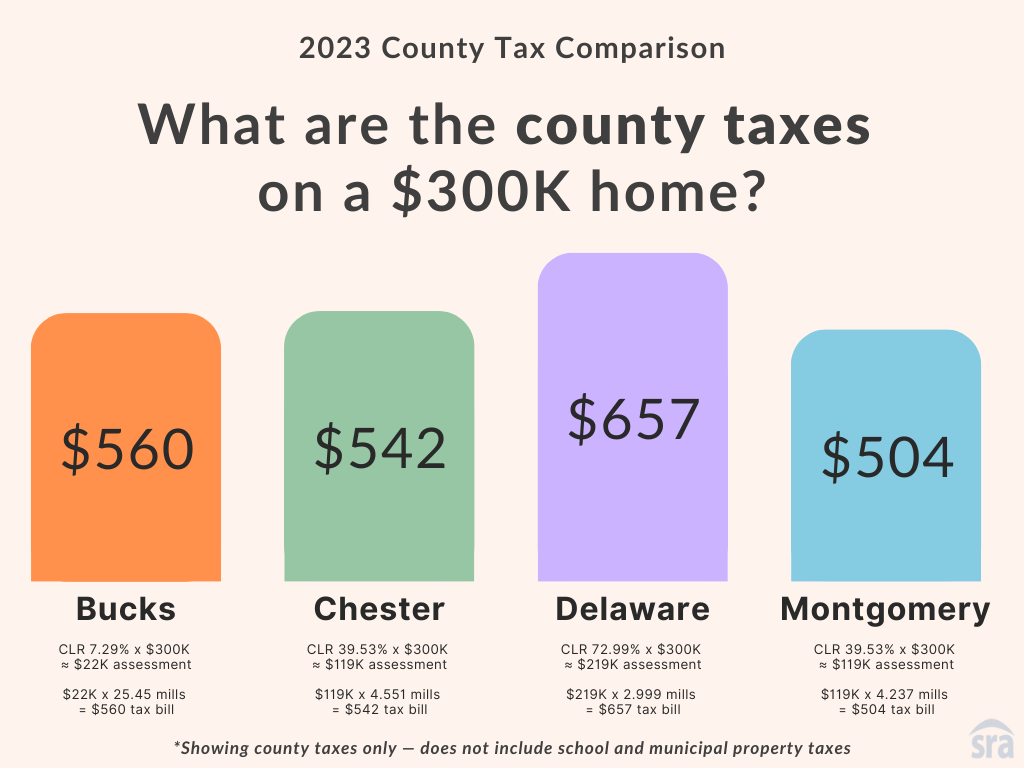
Summary
If you are buying a home in the Philadelphia suburbs, you will eventually hear the word millage, nod politely, and then go home and Google it. That is normal. Millage rates are important, but they are also one of the most misunderstood parts of the property tax conversation, especially when buyers are comparing school districts across Chester County, Montgomery County, Delaware County, and Bucks County.
Here is the clean way to think about it. Millage rates tell you the tax rate applied to assessed value. They help you compare the tax burden of different school districts, but they do not tell you what you will actually pay unless you also understand assessments. In 2026, buyers are more monthly payment sensitive than they were a few years ago, and taxes are often the difference between buying comfortably and stretching too far. Sellers feel this too, because taxes influence buyer pools, days on market, and negotiation posture.
This guide explains what millage rates mean, how to compare school districts fairly, and how to use this information to make a smarter decision. I will also tie this back to the districts that buyers ask me about constantly, including Lower Merion, Radnor, Tredyffrin Easttown, Great Valley, West Chester Area, Downingtown Area, Central Bucks, and Council Rock, plus the common cross river comparison towns in New Jersey like Haddonfield, Moorestown, and Medford.
⸻
Table of Contents
1.What a millage rate is in plain English
2.Why millage rates matter in the Philly suburbs
3.The biggest mistake people make when comparing millage rates
4.The only comparison method that actually works
5.What this looks like in real districts buyers target
6.How buyers should use millage rates in 2026
7.How sellers should address taxes in marketing and negotiation
8.Pennsylvania vs New Jersey tax comparisons
9.Final takeaways
⸻
1. What a millage rate is in plain English
A millage rate is a tax rate expressed per one thousand dollars of assessed value. If a school district has a school tax millage of 20, you are paying 20 dollars for every one thousand dollars of assessed value.
The confusion starts because assessed value is not always the same as what the home would sell for. In Pennsylvania, assessments can be older, can differ township to township, and do not always move perfectly with market value. So millage is a rate. It is not your bill.
That is why two buyers can look at the same millage rate and still pay very different taxes depending on the assessment of their specific home.
⸻
2. Why millage rates matter in the Philly suburbs
Millage rates matter because they influence monthly payment, and monthly payment influences demand. Buyers do not only shop by purchase price. They shop by affordability.
In practical terms, taxes impact which price band you can comfortably buy in, whether you can compete for a home without feeling stretched, and how a buyer compares two towns that look similar on paper.
This is why the tax conversation shows up constantly in markets like the Main Line, including Ardmore, Wayne, Bryn Mawr, Villanova, and Haverford, Chester County towns like West Chester, Downingtown, Malvern, Exton, and Phoenixville, and Bucks County towns like Doylestown, Newtown, Yardley, and Richboro.
It also shows up across the river in New Jersey, where taxes are a major part of the cost of entry in towns like Haddonfield, Moorestown, and Medford.
Taxes matter for resale too. High taxes do not automatically hurt resale, but they raise buyer expectations. In 2026, buyers paying strong monthly payments want the home to feel worth it, which often means move in ready or at least clearly well maintained.
⸻
3. The biggest mistake people make when comparing millage rates
The biggest mistake is comparing millage rates alone, as if that number tells you who has higher taxes. It does not.
Your tax bill is driven by a combination of assessed value, millage rate, and local factors depending on how the bill is structured. A district can have a higher millage rate but a similar or lower average bill if assessed values are lower. A district can have a lower millage but higher bills if assessed values are higher.
This is why you will hear buyers say, I thought taxes were lower here, and then they see a property tax record that is higher than expected. They were looking at the wrong variable.
⸻
4. The only comparison method that actually works
If you want to compare school district tax burdens responsibly, here is the method I use with clients.
First, identify the districts you are truly considering. Not ten. Three to five.
A common set might be Radnor, Lower Merion, Tredyffrin Easttown, West Chester Area, and Downingtown Area. In Bucks County, it is often Central Bucks and Council Rock.
Second, compare similar homes, not random homes. Pick comparable properties in each district. Similar home type, similar price band, similar age and size. A 1970s colonial in a family neighborhood is not a fair comparison to a newly built luxury home on acreage.
Third, use actual tax bills from public records. Look at the total tax bill and break it into components. In Pennsylvania you are typically looking at school district taxes plus county and municipal taxes.
Fourth, use millage as a supporting explanation, not the conclusion. Millage helps you understand why bills differ, but the bill is the reality.
Fifth, translate the annual taxes into a monthly payment number and plug it into your budget. Most buyers are surprised by how much taxes change what feels comfortable.
⸻
5. What this looks like in real districts buyers target
Buyers rarely choose a district purely because of millage. They choose districts because of a combination of schools, lifestyle, and long term resale confidence. Millage helps you understand the cost side of that equation.
Lower Merion and Radnor
Buyers often accept higher monthly costs because of district reputation and the lifestyle package. Proximity to Suburban Square in Ardmore, walkability in parts of Wayne, and SEPTA access along the Paoli line matter. Buyers want optionality, and they pay for it.
Tredyffrin Easttown
This attracts buyers who want strong schools and long term stability, plus access to the Route 202 corridor and commuting flexibility. Pockets near Paoli and Berwyn can feel particularly competitive when inventory is tight.
West Chester Area and Downingtown Area
These districts attract families who want a strong suburban lifestyle anchored by town identity. West Chester Borough draws buyers for restaurants and events, and Downingtown draws buyers for community feel and commuting access. Buyers in these districts often compare not only taxes but also lot size, neighborhood feel, and how turnkey the home is.
Central Bucks and Council Rock
In Bucks County, the districts matter, but so does the lifestyle. Doylestown’s downtown, Newtown’s charm, and parks like Tyler State Park and Core Creek Park drive demand. Buyers will do the math, but they also buy the experience.
⸻
6. How buyers should use millage rates in 2026
Millage rates should be used as a planning tool, not as a deciding tool.
If you are a buyer, model your monthly payment with taxes included before you make an offer. Assume taxes can change over time, and be honest about whether you are stretching for a district in a way that will feel stressful after closing.
Also remember that strong school districts often support resale liquidity. That does not mean you should ignore taxes, but it does mean you should weigh cost against the stability and buyer demand that certain districts create.
⸻
7. How sellers should address taxes in marketing and negotiation
If you are selling in a higher tax district, your job is to make the value clear. Buyers will accept a high tax bill when they understand what they are paying for and the home feels like a safe purchase.
That means marketing should emphasize school district reputation, neighborhood feel, proximity to parks and town centers, and commute convenience when relevant.
On the Main Line that might mean highlighting Suburban Square, SEPTA rail access, and local amenities. In Chester County it may mean tying your home to the West Chester Borough lifestyle, local parks, and neighborhood identity. In Bucks County it might mean proximity to Doylestown or Newtown and the trail and park network. In South Jersey, it often means emphasizing PATCO access and walkable town centers like Haddonfield.
In negotiation, sellers should expect that taxes can shape buyer posture. A buyer who feels stretched by the monthly payment will often negotiate harder after inspection. Clean presentation, clear maintenance, and disciplined pricing reduce that leverage.
⸻
8. Pennsylvania vs New Jersey tax comparisons
Many buyers compare Pennsylvania to New Jersey because the towns compete for the same buyer pool. Haddonfield, Moorestown, Medford, and Cherry Hill are common cross shop towns for buyers who work in Philadelphia or want strong schools.
The mindset shift is important. New Jersey taxes often read as higher, but buyers treat them as part of the package when the town offers a clear benefit, like strong schools and a walkable downtown. In Pennsylvania, tax burden varies more by township and can be less predictable depending on assessment practices. The result is that buyers often feel they need to do more homework in Pennsylvania to avoid surprises.
⸻
9. Final takeaways
Millage rates are useful, but they are not the whole story. In the Philly suburbs, the only way to compare school district tax burdens intelligently is to compare actual tax bills on similar homes, translate that into monthly payment, and weigh it against the lifestyle and resale strength the district provides.
If you want help comparing districts in Chester, Montgomery, Delaware, and Bucks County, or comparing PA to NJ options, I can run the analysis quickly and translate it into a clear decision for your budget and timeline.
Eric Kelley, Philadelphia Suburbs Realtor & Attorney