

Staging vs. Renovating:
Which Pays More in the Philly Suburbs?
Summary
If you are preparing to sell in the Philadelphia suburbs in 2026, you are almost guaranteed to face one expensive question: should you stage the home, renovate it, or do both. Sellers often assume renovations pay more because they cost more. In reality, buyers pay premiums for two things: confidence and clarity. Staging is usually the fastest, lowest risk way to increase both. Renovating can pay more, but only when it removes a real barrier that is shrinking your buyer pool. The smart move is not to guess. It is to match your investment to your town, your price band, and what buyers are actually choosing right now.
This guide explains how staging and renovating typically perform across the Main Line, Chester County, Bucks County, and South Jersey, including where I see the strongest returns in towns like Wayne, Ardmore, Bryn Mawr, West Chester, Phoenixville, Doylestown, Newtown, Haddonfield, Moorestown, and Medford.
Table of Contents
1.The real goal of pre listing work
2.Why staging often outperforms renovations on ROI
3.When renovations beat staging
4.The turnkey premium in 2026 and why it matters
5.Market differences by town and buyer type
6.A decision framework you can use in one hour
7.The biggest mistakes sellers make
8.My recommended plan for most Philly suburb sellers
9.Final takeaways
Body
1. The real goal of pre listing work
Sellers think the goal is to spend money and get it back. The better goal is to increase the number of serious buyers who would write an offer in the first week. In high demand school districts and walkable pockets, your first seven to ten days is when you have the most leverage. That is true on the Main Line near Suburban Square in Ardmore and through Wayne, and it is true in West Chester Borough, Phoenixville near Bridge Street, and Doylestown Borough as well. When your launch creates competition, you get better price and better terms. When your launch is quiet, buyers negotiate harder.
That is why staging and renovating should be evaluated like marketing investments. Will this expand my buyer pool and reduce buyer fear.
2. Why staging often outperforms renovations on ROI
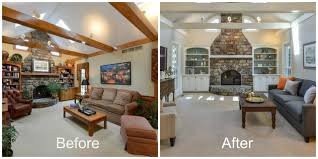
Staging is the highest leverage move for most sellers because it changes perception quickly without delaying your sale. Buyers decide whether they want to tour in seconds online, and once they tour, they decide whether the home feels easy or stressful. Staging makes a home feel calm, clear, and cared for.
Staging tends to pay because it improves three conversion points
Online click to showing conversion
Showing to offer conversion
Offer strength through buyer confidence
In the Philly suburbs, staging is especially powerful in mid to upper price bands where buyers are busy, renovation averse, and comparing homes across towns. A buyer looking at Radnor, Lower Merion, and Tredyffrin Easttown will often choose the home that looks move in ready, even if it is not the newest house on the block. The same is true for buyers comparing Central Bucks and Council Rock areas in Bucks County, and for South Jersey buyers considering Haddonfield versus Moorestown.
Staging is also more predictable than renovation. A staged home almost always looks better. A renovation can be expensive and still miss the buyer’s taste.
3. When renovations beat staging
Renovations win when they remove a real barrier to buyer demand. If your home is in a strong location but has a feature that makes most buyers walk away, the right targeted renovation can pay for itself by expanding the buyer pool.
Common renovation triggers where I see value
A kitchen that is functionally broken, not just dated
A primary bathroom that is in poor condition in a price band where buyers expect updated
Floors and paint that make the home feel neglected
Water intrusion issues that create fear in older homes
Major mechanical concerns that buyers will discount heavily
On the Main Line, this often shows up in older stone homes in Bryn Mawr or Haverford where the bones are great but the kitchen or systems are outdated. In West Chester and Phoenixville, it can show up in older homes where basement moisture or drainage creates uncertainty. In Bucks County, it can show up in historic homes near Newtown or Doylestown where deferred maintenance makes buyers nervous.
The key is that renovation should be surgical. You are not trying to create your dream home. You are trying to remove the most obvious reason a buyer would hesitate.
4. The turnkey premium in 2026 and why it matters
In 2026, the turnkey premium is real across much of the Philly suburbs. Buyers are cautious about renovation timelines and contractor uncertainty, and they discount homes that feel like projects. This does not mean every home must be newly renovated. It means the home needs to feel maintained and livable.
Turnkey does not require luxury finishes. It requires
Clean and bright presentation
Functional layout and defined spaces, especially for home office needs
Systems that appear reasonably maintained
A lack of visible deferred maintenance
A seller who stages well and handles key maintenance can often capture a meaningful portion of the turnkey premium without a full renovation.
5. Market differences by town and buyer type
Staging and renovation returns vary by buyer pool.
Main Line towns like Ardmore, Wayne, and Villanova have buyers who value schools, rail access, and lifestyle convenience. Staging helps because buyers are often comparing across multiple towns and want an easy move. A clean staged home near Suburban Square or near the Radnor Trail can create strong emotional pull.
Chester County borough markets like West Chester and Phoenixville are lifestyle driven. Walkability to restaurants and events matters. Buyers who are excited about dinner on Gay Street or weekend energy on Bridge Street often want a home that feels ready for that lifestyle. Staging and targeted cosmetics tend to pay well.
Bucks County has a charm premium. Buyers in Doylestown and Newtown respond strongly to character, but clutter and poor presentation kills that charm fast. Staging is often a better first move than renovating.
South Jersey buyers are highly monthly payment aware because taxes are a meaningful factor. In towns like Haddonfield and Moorestown, buyers will pay for quality, but they are not forgiving of homes that feel overpriced and dated. Staging plus targeted updates often outperforms big renovations unless the home is truly unmarketable without them.
6. A decision framework you can use in one hour
Here is the framework I use with sellers.
Step one: identify buyer fear triggers
Roof age, HVAC age, electrical concerns, water intrusion, drainage, foundation signals
Step two: identify perception issues
Clutter, furniture scale, dark rooms, unclear room purpose, worn paint, tired lighting
Step three: match strategy to market leverage
If your market is tight and your home is in a prime school zone, staging and minor prep may be enough
If your market is rising inventory or your home is dated for its price band, targeted updates may be necessary
Step four: decide on the smallest set of actions that will expand your buyer pool
Most sellers do not need ten projects. They need two or three smart ones.
7. The biggest mistakes sellers make
The common mistakes are predictable
Over renovating and missing the best listing window
Choosing finishes that are too specific and narrow appeal
Ignoring water management and mechanical confidence while spending on cosmetics
Skipping staging and assuming buyers will use imagination
Doing too much without a clear pricing plan
8. My recommended plan for most Philly suburb sellers
For most homes in the 600k to 1.5M range, the strongest approach is
Fix obvious maintenance issues and reduce buyer fear
Do paint and lighting if needed
Stage or partially stage to create clarity and calm
Launch with strong photos, video, and a pricing strategy within psychological thresholds
Then you let the market respond in the first week.
9. Final takeaways
In the Philadelphia suburbs, staging usually pays more reliably because it improves perception quickly and reduces buyer friction. Renovations can pay more, but only when they remove a real barrier that was suppressing demand. The best sellers in 2026 do not guess. They choose the simplest plan that expands the buyer pool and creates competition early.
Eric Kelley, Philadelphia Suburbs Realtor & Attorney