
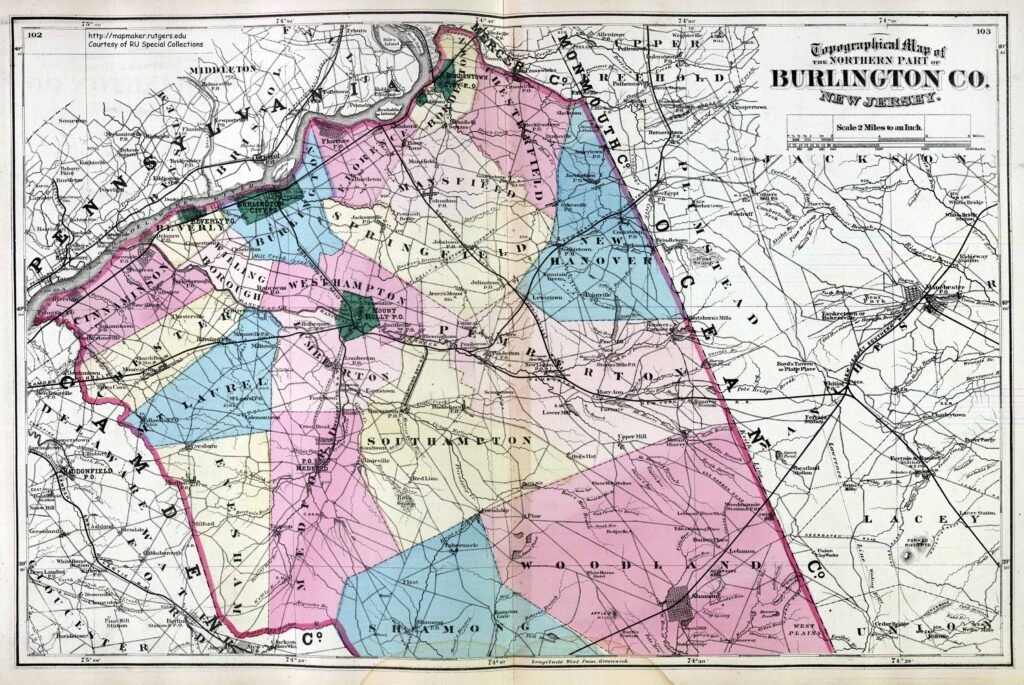
Burlington County Property Tax Comparison by Town
Summary
Property taxes in Burlington County can vary dramatically town-to-town, and in 2026 that difference matters just as much as the purchase price—especially for buyers comparing places like Moorestown, Medford, Mount Laurel, Marlton (Evesham), Cinnaminson, Delran, and the Route 130 corridor towns.
This post gives you a practical, buyer-friendly comparison using the New Jersey Division of Taxation’s 2024 Average Residential Tax Bill data (the most straightforward way to compare what homeowners actually pay). We’ll also explain why “tax rate” and “tax bill” are not the same thing, how school funding drives the majority of the bill, and what to watch for before you commit to a town.
⸻
Table of Contents
1.Tax Rate vs. Tax Bill: What You Should Compare
2.Burlington County Baseline: The County Average
3.Highest Average Tax Bills in Burlington County (2024)
4.Mid-Range Towns: Where Many Buyers Land
5.Lowest Average Tax Bills (and Why They’re Lower)
6.Why Taxes Vary So Much by Town
7.A Buyer’s Checklist for Evaluating Taxes
8.What This Means for Sellers
9.Final Takeaways
⸻
1. Tax Rate vs. Tax Bill: What You Should Compare
When buyers say “taxes are high,” they often mean one of two things:
•Tax rate: the rate applied to assessed value (often shown as a number like 2.9 or 3.8).
•Tax bill: the actual dollars paid per year.
For comparing towns, the average tax bill is usually more useful because it reflects real-world outcomes for homeowners. A town can have a high tax rate but a lower average bill if home values/assessments are lower, and vice versa.
That’s why the state’s “Average Residential Tax Bill” report is a helpful starting point for Burlington County comparisons.
⸻
2. Burlington County Baseline: The County Average
According to the NJ Division of Taxation’s 2024 report, the average residential property tax bill in Burlington County is $7,786.
That number is not what everyone pays—it’s just a benchmark. The real value is seeing how individual towns compare to that baseline.
⸻
3. Highest Average Tax Bills in Burlington County (2024)
If you’re shopping Burlington County and want a quick “top end” snapshot, these towns stand out in the state’s 2024 average tax bill data:
•Chesterfield Township: $12,692
•Moorestown Township: $12,647
•Medford Township: $11,710
•Medford Lakes Borough: $11,019
•Shamong Township: $9,913
•Riverton Borough: $9,596
What this usually means for buyers
These aren’t “bad” towns—many are highly desirable. Higher tax bills often correlate with:
•higher home values and stronger demand
•school funding structure
•low turnover / strong community services
For example, Moorestown and Medford are frequently chosen for long-term family living and stability. Taxes are part of the cost of entry.
⸻
4. Mid-Range Towns: Where Many Buyers Land
Many Burlington County buyers end up in towns where the taxes are near the county average (or modestly above it) and the housing stock offers a broad range of price points.
From the 2024 report, examples include:
•Cinnaminson Township: $8,377
•Delran Township: $8,073
•Bordentown Township: $8,176
•Mansfield Township: $8,214
•Lumberton Township: $7,998
•Westampton Township: $6,775
•Mount Laurel Township: $6,980
•Evesham Township (Marlton): $8,696
Practical takeaway
This “middle band” is where you’ll often see the best mix of:
•predictable demand
•neighborhood variety
•commute convenience (Route 73 / I-295 / Turnpike access depending on town)
•taxes that don’t shock buyers coming from higher-tax pockets
⸻
5. Lowest Average Tax Bills (and Why They’re Lower)
On the lower end of the Burlington County spectrum (based on 2024 average bills), you’ll see towns like:
•Bass River Township: $4,757
•Washington Township: $4,770
•Pemberton Township: $5,045
•Pemberton Borough: $5,180
•New Hanover Township: $5,503
•Florence Township: $5,566
•Mount Holly Township: $5,584
Why lower doesn’t automatically mean “better deal”
Lower taxes can reflect:
•lower average home values/assessments
•different service structures
•different school cost burdens
•different buyer demand profiles
So the correct move is to compare total monthly cost + lifestyle fit + resale confidence—not just the tax number.
⸻
6. Why Taxes Vary So Much by Town
In New Jersey, property taxes generally fund three big buckets:
•Schools (often the largest share)
•Municipal services
•County taxes
Even within the same county, different towns have:
•different school districts and budgets
•different housing value profiles
•different commercial ratables
•different public service costs
That’s why Burlington County includes both:
•high-tax, high-demand lifestyle towns (like Moorestown and Medford)
•and lower-tax towns where the market dynamics are simply different
Also, tax rates can look high or low depending on assessments—New Jersey’s statewide “General and Effective Tax Rates” tables show how much rates vary by municipality.
⸻
7. A Buyer’s Checklist for Evaluating Taxes
If you’re serious about buying in Burlington County, here’s the practical way to evaluate taxes without getting burned:
1.Confirm the current annual tax bill for the specific property (not just town averages).
2.Ask whether a reassessment/revaluation is underway or likely.
3.If it’s new construction, assume taxes may increase after assessment updates.
4.Compare taxes to purchase price and calculate your true monthly payment.
5.Evaluate whether the town’s tax burden is offset by what you care about: schools, commute access, neighborhood quality, services, and resale strength.
⸻
8. What This Means for Sellers
If you’re selling in a higher-tax Burlington County town, the play is not to hide it—it’s to frame the value.
Buyers will accept higher taxes when you clearly communicate:
•school district strength
•neighborhood quality and stability
•lifestyle benefits (parks, downtowns, commute convenience)
•the home being turnkey / low-risk
In 2026, the sellers who win are the ones who reduce uncertainty and show buyers why the total monthly cost makes sense.
⸻
9. Final Takeaways
Burlington County property taxes vary meaningfully by town, from the mid-$4k range in some municipalities to the $11k–$12k+ range in others, based on the NJ Division of Taxation’s 2024 average residential tax bill data.
The smartest way to use this information is not to chase the lowest number—but to evaluate:
•your target town + your price band + your monthly payment reality
•and how that aligns with the lifestyle and long-term resale confidence you want.
⸻
Eric Kelley, Philadelphia Suburbs Realtor & Attorney