

Homes Near Top High Schools:
Do They Outperform?
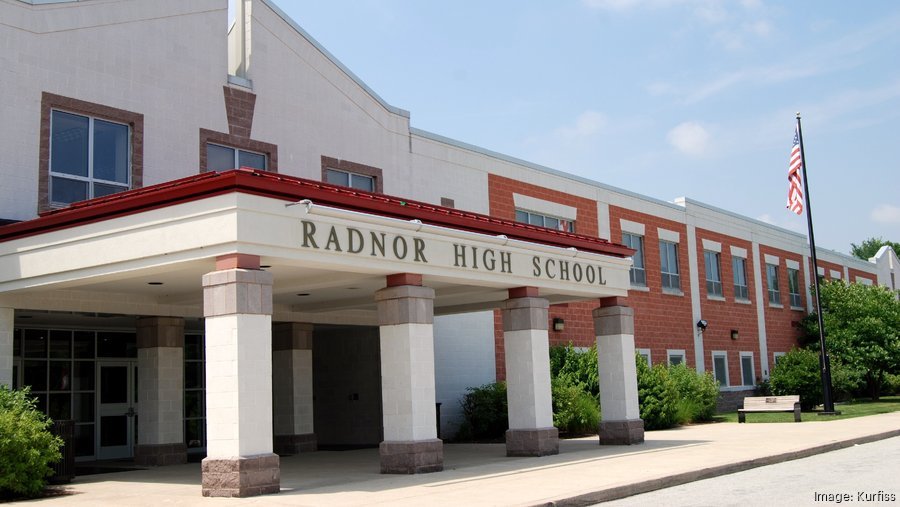
Summary
In the Philadelphia suburbs, “good schools” are one of the most powerful drivers of home demand—but many buyers (and sellers) ask a more specific question in 2026: Do homes near top high schools actually outperform the broader market? The answer is often yes—but not always for the reasons people think.
Outperformance can come from three different forces: (1) being in a high-performing district, (2) being in a desirable feeder pattern, and (3) being physically close to a high school campus. Those are not the same thing. In many cases, district boundaries matter more than proximity, and in some cases, being too close to a school can introduce traffic, parking, and noise tradeoffs that buyers discount.
This post breaks down how school quality and proximity influence value across the Philly suburbs—using real, local context from Lower Merion, Radnor, Tredyffrin-Easttown, West Chester, Downingtown, Central Bucks, Council Rock, and South Jersey markets like Haddonfield and Moorestown.
⸻
Table of Contents
1.The Big Question: Proximity vs. District
2.Why School Quality Supports Home Values
3.What “Outperform” Means in Real Estate Terms
4.When Homes Near Top High Schools DO Outperform
5.When Homes Near Top High Schools DON’T Outperform
6.The Hidden Factor: Feeder Patterns and “Micro-District” Demand
7.PA vs. NJ: How School Reputation Translates Into Pricing
8.How Buyers Should Use This Insight in 2026
9.How Sellers Should Market Homes Near Top Schools
10.Final Takeaways
⸻
1. The Big Question: Proximity vs. District
Let’s separate three concepts that get lumped together:
A) Being in a top school district
This is the biggest driver of value. Buyers pay premiums for districts with strong reputations because they provide resale confidence and a deeper buyer pool.
B) Being assigned to a particular high school within a district
In large districts, the high school assignment can matter because buyers sometimes prefer specific feeder patterns.
C) Being physically near the high school campus
This is about geography. It can be a positive (walkability for students, community feel) or a negative (traffic, noise, parking, Friday night lights).
Most “school premium” value comes from A and B, not C.
⸻
2. Why School Quality Supports Home Values
High-performing schools support home values because they create a stable base of demand.
In the Philly suburbs, school-driven markets often show:
•faster sales when homes are priced correctly
•stronger list-to-sale price ratios
•fewer dramatic price swings in slower cycles
•deeper demand across multiple price bands
Families relocate specifically for districts like Lower Merion, Radnor, T/E, Central Bucks, Council Rock, West Chester, and Downingtown. Even buyers without children often factor in school reputation because they know the next buyer likely will.
⸻
3. What “Outperform” Means in Real Estate Terms
When we say a home “outperforms,” we usually mean one or more of the following:
•Higher price per square foot relative to nearby areas
•Shorter days on market in comparable conditions
•Higher list-to-sale ratios (selling closer to or above asking)
•Stronger resale consistency across market cycles
•Less sensitivity to broader market slowdowns
School-driven outperformance is real, but it isn’t automatic. It depends on how buyers perceive the specific location.
⸻
4. When Homes Near Top High Schools DO Outperform
Homes near highly regarded high schools can outperform when proximity is seen as a lifestyle advantage rather than a disruption.
Scenario 1: Walkable, family-centered neighborhoods
In many Main Line and Bucks County neighborhoods, buyers value the ability for kids to walk or bike to school, especially in areas with sidewalks and established community culture.
This is most common in:
•classic neighborhood grids near town centers
•areas where school traffic is managed well
•neighborhoods where “community identity” is tied to the schools
Scenario 2: Strong district + strong neighborhood + manageable traffic
If the neighborhood is desirable regardless of the school and the school is simply a bonus, buyers often pay up.
Think: a great street, strong lot, and the school is nearby without being disruptive.
Scenario 3: High school proximity reinforces “district identity”
Some areas have a deep identity tied to the high school—alumni networks, athletics, and community pride. That social fabric can strengthen demand and support stable pricing.
⸻
5. When Homes Near Top High Schools DON’T Outperform
Proximity can also be neutral—or even negative—if buyers perceive the downsides as outweighing the benefits.
Scenario 1: Traffic and parking friction
High school campuses can produce:
•morning and afternoon congestion
•event parking spillover
•noise during games and activities
If a home sits on a main traffic corridor leading to the school, some buyers will discount it—even if the district is excellent.
Scenario 2: “Close enough to feel it, not close enough to benefit”
There’s a sweet spot. Buyers often want:
•easy access
•but not direct adjacency to the busiest zones
Homes directly bordering a campus may have a narrower buyer pool than homes a few blocks away.
Scenario 3: District premium already priced in
In many top districts, the entire township already carries the school premium. In those cases, being near the high school doesn’t add much extra value because buyers are paying for the district overall.
⸻
6. The Hidden Factor: Feeder Patterns and “Micro-District” Demand
One of the most overlooked value drivers is the feeder pattern, especially at the elementary and middle school levels.
In many suburban searches, buyers say “I want Lower Merion” or “I want Central Bucks,” but their behavior often shows:
•strong preference for certain elementary schools
•desire for specific middle school pipelines
•attention to peer groups and neighborhood identity
In 2026, well-informed buyers increasingly analyze:
•exact school assignment
•boundary stability
•potential redistricting pressure
This creates “micro-markets” where values can differ within the same district.
⸻
7. PA vs. NJ: How School Reputation Translates Into Pricing
Both PA and NJ markets price in school reputation, but the structure differs.
Pennsylvania
•School district is a major pricing driver
•Taxes vary by township and school district
•Buyers often stretch budgets to stay in top districts
•Reassessment risk can influence total cost post-purchase
New Jersey
•School funding is heavily tied to property taxes
•Top school towns often carry high taxes (e.g., Haddonfield, Moorestown)
•Buyers treat taxes as part of the “school value package”
•Proximity to the school may matter less than overall town reputation and walkability
In both states, school strength supports demand. But in NJ, the premium is often more “town-wide,” while in PA there can be more boundary-driven segmentation.
⸻
8. How Buyers Should Use This Insight in 2026
If you’re buying with schools in mind:
•Prioritize district boundaries first
•Then verify specific school assignments (especially elementary and middle)
•Treat “near the high school” as a bonus only if it improves lifestyle
•Be cautious about traffic corridors and event spillover
•Don’t overpay just because a home is close to the campus—focus on street and neighborhood quality
If your goal is resale confidence, being in the right district generally matters more than being physically close to the high school.
⸻
9. How Sellers Should Market Homes Near Top Schools
If you’re selling near a top high school:
•Emphasize district reputation and school assignment clearly
•Highlight walkability if it’s truly practical and safe
•Address traffic concerns proactively (show parking, quiet streets, setbacks)
•Market the broader lifestyle: parks, downtown access, transit, community programming
•Avoid overpricing: buyers will pay premiums, but they still compare micro-location carefully in 2026
When marketed correctly, proximity can be a meaningful advantage—but only if it’s framed as a lifestyle benefit.
⸻
10. Final Takeaways
Homes associated with top high schools often outperform, but the most important driver is usually district alignment and feeder patterns, not simple physical proximity. In 2026, buyers pay premiums for strong school systems because they create deep, durable demand. However, being too close to a high school can introduce traffic and noise tradeoffs that narrow the buyer pool.
The best-performing school-driven homes are typically those that combine:
•strong district reputation
•desirable neighborhood feel
•low-friction micro-location
•and a “livable” lifestyle that works every day, not just during the school year.
⸻
Eric Kelley, Philadelphia Suburbs Realtor & Attorney