

Route 202 Corridor Development and Home Values
Summary
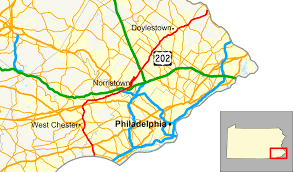
The Route 202 corridor is one of the most important “hidden engines” of home values in the Philadelphia suburbs. In 2026, buyers aren’t just choosing a house—they’re choosing a lifestyle ecosystem: commute patterns, employment density, shopping, dining, and long-term development momentum. From King of Prussia and Wayne through Malvern/Great Valley, Exton, and West Chester, Route 202 ties together some of the region’s strongest school districts, highest-demand neighborhoods, and most resilient price bands.
This guide explains how Route 202 corridor development impacts home values, what types of development matter most (and which don’t), and how buyers and sellers can use corridor-level insight to make smarter decisions.
⸻
Table of Contents
1.Why Route 202 Matters for Suburban Home Values
2.What “Development” Really Means in Real Estate Terms
3.Employment Hubs: The #1 Value Driver Along 202
4.Transportation and Commute Friction: Access vs. Noise
5.Retail, Dining, and Lifestyle Nodes That Move the Market
6.School Districts Along the 202 Corridor
7.New Construction, Zoning, and Inventory Pressure
8.Micro-Location: How Two Streets Can Price Differently
9.What This Means for Buyers in 2026
10.What This Means for Sellers in 2026
11.Final Takeaways
⸻
1. Why Route 202 Matters for Suburban Home Values
If you work in the Philly suburbs, there’s a good chance Route 202 touches your life whether you realize it or not. It’s the connective tissue linking major suburban job centers, high-demand residential towns, and lifestyle amenities. For home values, that matters because buyers consistently pay for:
•Shorter, more predictable commutes
•Access to employment and services
•“Convenience density” without urban congestion
•Resale confidence created by long-term demand
Route 202 isn’t one market—but it influences many of the markets where buyers compete most aggressively: Radnor/Wayne, Malvern/Great Valley, Exton/West Whiteland, and the West Chester area.
⸻
2. What “Development” Really Means in Real Estate Terms
When people hear “development,” they often think “new construction.” But for home values, development is broader. The types that matter most:
•Employment growth (new offices, medical facilities, corporate campuses)
•Infrastructure improvements (traffic patterns, road access, transit connectivity)
•Retail and dining clusters (livability and convenience)
•Mixed-use nodes (walkability, services, housing variety)
The types that can hurt value (depending on micro-location):
•Increased traffic congestion
•Noise spillover
•Overbuilding that expands supply too quickly in one pocket
The key is that development affects demand and supply differently. Demand-driving development often pushes values up; supply-expanding development can temper appreciation—unless demand grows faster.
⸻
3. Employment Hubs: The #1 Value Driver Along 202
The strongest long-term driver of home values along Route 202 is employment. Buyers pay a premium to live near job centers—especially when work is hybrid and commuting is “sometimes” rather than daily. The corridor’s most influential employment gravity wells include:
King of Prussia and the 202/I-76 interchange
This is a major regional job center and a consistent demand driver for nearby Main Line neighborhoods. Buyers looking in Wayne, Villanova, and parts of Radnor Township often cite “easy access to King of Prussia” as a reason to pay more.
Great Valley / Malvern area
The Malvern/Great Valley side of the corridor attracts buyers who want proximity to corporate offices while keeping a residential, high-quality-of-life feel. Demand here often concentrates around Great Valley School District and convenience to Route 202.
Exton / West Whiteland
Exton is a classic “convenience hub,” drawing buyers who want quick access to both jobs and services. When Exton’s employment and retail ecosystem stays strong, nearby neighborhoods benefit from steady buyer pools.
Bottom line: when employment density grows or stays stable along a corridor, it supports housing demand even when interest rates fluctuate.
⸻
4. Transportation and Commute Friction: Access vs. Noise
Route 202 development also changes home values through commute friction—how easy it is to get where you need to go. Two truths can exist at once:
•Proximity to 202 can increase value because it reduces travel time.
•Too much proximity can reduce value if it introduces noise, traffic, or awkward access.
For example, a home with a clean five-minute hop to 202 in Malvern or Exton often outperforms a similar home that requires navigating local bottlenecks. But a home backing to a high-traffic corridor or near a congested interchange can face buyer hesitation—even in a strong market.
In 2026, buyers are more sensitive to:
•Morning traffic patterns
•Road noise and backyard usability
•Whether a neighborhood “feels calm” despite being close to everything
⸻
5. Retail, Dining, and Lifestyle Nodes That Move the Market
Lifestyle development matters because it changes how it feels to live somewhere. Along Route 202, the most valuable lifestyle nodes tend to combine shopping, dining, and errands in a way that reduces daily friction.
Examples buyers consistently respond to:
•Downtown Wayne and Lancaster Avenue amenities (paired with 202 access)
•Exton’s retail and services ecosystem (errands are easy, which matters for families)
•West Chester’s restaurant and event-driven downtown nearby (more lifestyle gravity)
Even when buyers say “I just want a good house,” they behave like lifestyle shoppers: they pay more to be close to places they actually use.
⸻
6. School Districts Along the 202 Corridor
Route 202 intersects with some of the region’s most influential school districts—another reason corridor development affects value.
High-demand districts tied to 202-adjacent markets include:
•Radnor Township School District (Wayne area)
•Tredyffrin-Easttown (T/E) (Main Line-adjacent Chester County access)
•Great Valley School District (Malvern area)
•West Chester Area School District (West Chester-adjacent townships)
When strong school districts overlap with convenience development (jobs + access + amenities), you get the most resilient value pockets. Buyers stretch budgets in these zones because resale confidence remains high.
⸻
7. New Construction, Zoning, and Inventory Pressure
Development can expand supply—but along much of the 202 corridor, supply expansion is constrained by:
•Limited remaining buildable land in established areas
•Zoning and township restrictions
•Community resistance to dense development
That’s why true “large subdivision” growth is less common in some prime areas, and why new construction often appears as:
•Infill builds
•Small townhome communities
•Tear-downs and custom rebuilds
In 2026, inventory remains one of the biggest value supports in corridor towns: demand is broad, but the supply pipeline is not unlimited.
⸻
8. Micro-Location: How Two Streets Can Price Differently
A major theme in 2026 is that buyers are extremely micro-location aware. Along Route 202, micro-location differences include:
•Which side of a major road you’re on
•Whether school assignment changes by a few blocks
•Noise/traffic patterns
•Walkability to a downtown node
•Convenience to the “right” interchange
This is why “Route 202 corridor” is useful context, but neighborhood-level analysis is what determines pricing outcomes. Two homes can share the same town and school district yet perform differently because one feels calmer, more walkable, or more convenient.
⸻
9. What This Means for Buyers in 2026
If you’re buying along the Route 202 corridor:
•Treat 202 as a value map, not a guarantee.
•Prioritize the “best friction profile”: easy access without noise.
•Compare total lifestyle convenience: errands, dining, commute, schools.
•Recognize that well-located homes near stable employment nodes hold value better long-term.
If you’re torn between towns like Wayne vs. Malvern vs. Exton, the right decision often comes down to your weekly routine more than the listing photos.
⸻
10. What This Means for Sellers in 2026
If you’re selling in a 202-adjacent market:
•Lead with lifestyle and access: “minutes to 202,” “easy King of Prussia access,” “near Exton conveniences,” etc.
•Price to your micro-location, not your ZIP code.
•Understand that buyers will discount for road noise, awkward access, or congestion.
•Presentation matters more in price bands where buyers have choices.
In 2026, buyers reward clarity and punish overpricing. Development supports value, but it doesn’t excuse unrealistic pricing.
⸻
11. Final Takeaways
Route 202 corridor development impacts home values because it shapes the fundamentals buyers care about most: employment access, commute friction, lifestyle convenience, school-driven demand, and long-term resale confidence. The best-performing homes are those that capture the benefits of the corridor without absorbing its drawbacks.
If you’re buying or selling in Wayne, Villanova, Malvern, Exton, West Chester-adjacent townships, or other 202-connected areas, a corridor-level lens combined with micro-location analysis is one of the smartest ways to make a confident decision in 2026.
⸻
Eric Kelley, Philadelphia Suburbs Realtor & Attorney