

How Buyer Demand Shifts Between Price Bands
Summary
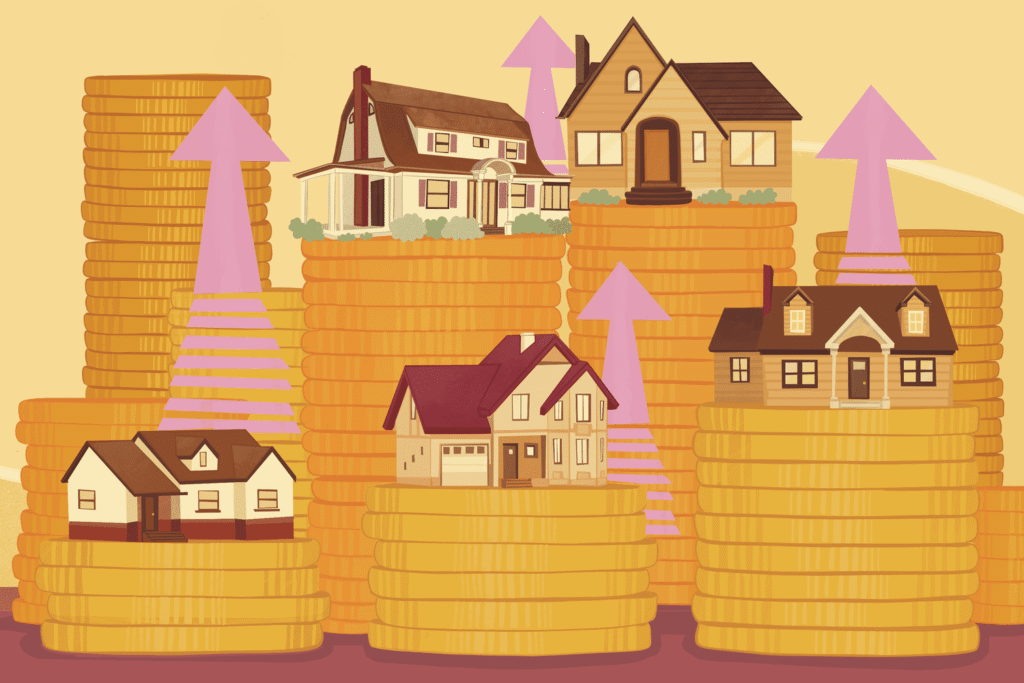
Buyer demand in the Philadelphia suburbs does not move uniformly. In 2026, one of the most important concepts buyers and sellers need to understand is that the housing market behaves very differently depending on price band. A home priced at $600,000 may face intense competition, while a similar home at $1.6M in the same town may sit for months. This isn’t random—it’s structural.
This post breaks down how buyer demand shifts between price bands, why those shifts exist, and what it means for buyers, sellers, relocators, and investors across Chester County, the Main Line, Bucks County, Camden County, and South Jersey.
⸻
Table of Contents
1.Why Price Bands Matter More Than Headlines
2.How Buyer Pools Shrink as Prices Rise
3.Entry-Level and Lower-Mid Price Bands: Persistent Demand
4.Move-Up Price Bands: Sensitivity and Selectivity
5.Luxury Price Bands: Scarcity vs. Thin Buyer Pools
6.How Location Changes Price Band Behavior
7.School Districts and Price Band Compression
8.Days on Market by Price Band
9.What This Means for Buyers
10.What This Means for Sellers
11.Final Takeaways
⸻
1. Why Price Bands Matter More Than Headlines
Most market commentary treats housing as a single market. In reality, the housing market is a series of stacked micro-markets, each with its own buyer pool, motivations, and constraints.
Price bands matter because:
•Each band has a different number of qualified buyers
•Financing sensitivity changes as prices increase
•Emotional decision-making declines at higher price points
•Lifestyle priorities shift with income and life stage
Understanding price bands allows buyers and sellers to predict demand, not guess.
⸻
2. How Buyer Pools Shrink as Prices Rise
As prices increase, the buyer pool narrows—not gradually, but exponentially.
For example:
•A $600,000 home may attract hundreds of potential buyers
•A $1.2M home may attract dozens
•A $2.5M home may attract only a handful
This dynamic exists even in strong markets like the Main Line or top Bucks County towns. Demand does not disappear at higher price points—but it becomes far more selective and condition-dependent.
⸻
3. Entry-Level and Lower-Mid Price Bands: Persistent Demand
In most Philly suburbs, the strongest demand consistently exists in the entry-level and lower-mid price bands, even in higher-rate environments.
Characteristics include:
•First-time buyers
•Relocators with capped budgets
•Families prioritizing schools over size
•Investors seeking stable rental demand
In towns like Phoenixville, Downingtown, West Chester, and parts of Doylestown, homes in these bands often sell quickly, even when broader inventory increases.
⸻
4. Move-Up Price Bands: Sensitivity and Selectivity
The move-up segment—often between $800,000 and $1.4M depending on location—is where demand becomes highly sensitive.
Buyers in this range:
•Already own homes
•Are rate- and equity-conscious
•Compare lifestyle upgrades carefully
•Expect strong value for the price
In places like Wayne, Malvern, Yardley, and Cherry Hill, homes in this band must be well-priced and well-presented to move efficiently.
⸻
5. Luxury Price Bands: Scarcity vs. Thin Buyer Pools
Luxury markets behave differently.
While supply is limited, buyer pools are thin. Demand exists—but it is:
•Highly informed
•Less emotional
•More patient
•Extremely condition- and location-specific
In prestige markets like Haverford, Gladwyne, Villanova, Willistown, and Upper Makefield, luxury homes that align with buyer expectations sell well. Those that don’t can sit regardless of overall market strength.
⸻
6. How Location Changes Price Band Behavior
Price bands do not behave the same way everywhere.
For example:
•$1.5M in Phoenixville places you at the very top of the market
•$1.5M in Haverford may be entry-level luxury
•$1.5M in Moorestown or Haddonfield may still attract strong family demand
Location determines whether a price band feels aspirational, normal, or extreme, which directly affects demand.
⸻
7. School Districts and Price Band Compression
Top school districts compress demand upward.
In districts like:
•Lower Merion
•Radnor Township
•Tredyffrin-Easttown
•Council Rock
•Haddonfield
Buyers often stretch budgets to stay within district boundaries. This causes:
•Faster sales in mid-to-upper price bands
•Smaller pricing gaps between bands
•Stronger long-term value retention
School-driven demand reshapes price band behavior more than interest rates alone.
⸻
8. Days on Market by Price Band
Days on market (DOM) is one of the clearest reflections of shifting demand.
General patterns in 2026:
•Entry-level homes: short DOM, strong competition
•Mid-range homes: variable DOM, pricing sensitive
•Luxury homes: longer DOM, selective buyers
Even within the same town, DOM can vary dramatically by price band—making price-specific analysis essential.
⸻
9. What This Means for Buyers
Buyers should:
•Understand which price band they’re competing in
•Adjust expectations based on buyer pool size
•Recognize when demand weakens above certain thresholds
•Use slower bands to negotiate strategically
Buyers who understand price band dynamics often secure better terms—even in competitive markets.
⸻
10. What This Means for Sellers
Sellers must price for their true buyer pool, not the highest comparable.
Successful sellers:
•Price within active demand bands
•Avoid aspirational pricing jumps between bands
•Understand when they’re crossing a demand threshold
•Focus on presentation as price rises
Crossing into the next price band without justification is one of the most common—and costly—seller mistakes.
⸻
11. Final Takeaways
In 2026, buyer demand in the Philadelphia suburbs is not uniform—it is segmented by price band. Entry-level homes remain competitive, move-up markets require precision, and luxury markets reward alignment over optimism.
Buyers and sellers who understand where demand accelerates—or drops off—can make smarter, more strategic decisions and avoid costly missteps.
⸻
Eric Kelley, Philadelphia Suburbs Realtor & Attorney