

Why Two Homes on the Same Street Can Sell for Very Different Prices
Summary
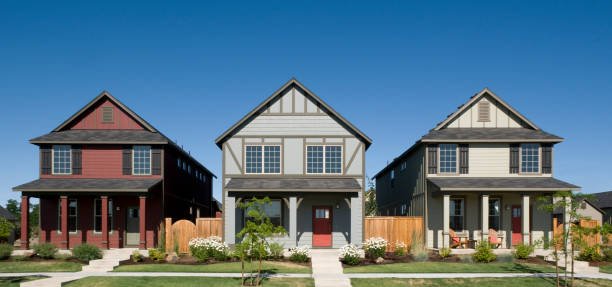
One of the most confusing realities for buyers and sellers alike is seeing two homes on the same street — sometimes only doors apart — sell for dramatically different prices.
On paper, this feels irrational. Same neighborhood. Same school district. Similar square footage. Yet in the Philadelphia suburbs, it’s not unusual to see price gaps of $50,000, $100,000, or more between homes that appear nearly identical at first glance.
The reason is simple: streets don’t price homes — buyers do. And buyers evaluate far more than an address when deciding what a home is worth.
This article breaks down the real, often invisible factors that cause pricing differences on the same street — and how buyers and sellers can use that knowledge strategically.
Table of Contents
The Myth of the “Same Street” Comparison
Micro-Location: Where a Home Sits on the Street
Lot Shape, Size, and Usability
Light, Orientation, and Exposure
Layout and How the Home Lives
Condition vs. Renovation ROI
Noise, Traffic, and Environmental Factors
Timing, Competition, and Buyer Psychology
How Sellers Should Think About Pricing
How Buyers Should Interpret Price Gaps
1. The Myth of the “Same Street” Comparison
Buyers and sellers often assume that homes on the same street should trade within a narrow price range. In reality, “same street” is one of the least precise ways to value a home.
In high-demand areas like the Main Line or popular Chester and Bucks County neighborhoods, buyers compare homes across multiple dimensions at once. Street name alone rarely carries decisive weight.
Instead, buyers subconsciously rank homes based on livability, risk, and long-term desirability — even when they can’t fully articulate why one home feels better than another.
2. Micro-Location: Where a Home Sits on the Street
Not all positions on a street are equal.
Homes tend to command higher prices when they are:
Set back from traffic
Located mid-block rather than on corners
Away from intersections or stop signs
Not directly across from driveways, alleys, or commercial uses
Even subtle differences matter. A home near the quieter center of the street often feels more private and less exposed than one at the edge — and buyers price that difference in, whether consciously or not.
3. Lot Shape, Size, and Usability
Two homes can have the same lot size on paper but offer very different usability in practice.
Buyers strongly favor:
Rectangular or evenly shaped lots
Flat or gently sloped yards
Backyards with privacy and usable space
Homes with:
Irregular lot shapes
Steep slopes
Drainage issues
Limited outdoor usability
often sell for less, even if square footage and location are similar.
In suburban markets, outdoor space isn’t just a bonus — it’s part of how buyers justify price.
4. Light, Orientation, and Exposure
Natural light is one of the most undervalued pricing drivers — and one of the hardest to quantify.
Homes tend to perform better when they have:
Southern or western exposure
Bright main living areas
Good window placement
Meanwhile, homes that feel darker — due to tree coverage, orientation, or neighboring structures — often struggle to achieve the same price, even after renovations.
This is why two houses with identical layouts can feel radically different the moment buyers walk inside.
5. Layout and How the Home Lives
Square footage doesn’t tell the full story. Layout does.
Buyers consistently pay more for homes that:
Have intuitive flow
Connect kitchens to living spaces
Offer flexible rooms
Minimize wasted or awkward space
A smaller home with a modern, functional layout will often outperform a larger home with dated or choppy circulation.
This is especially true in family-driven markets where daily livability outweighs raw size.
6. Condition vs. Renovation ROI
Renovations matter — but not always in the way sellers expect.
Buyers reward:
Updated kitchens and baths
Modern systems (HVAC, roof, electrical)
Clean, move-in-ready condition
They do not reliably reward:
Overly personalized design choices
Renovations that don’t improve function
Cosmetic upgrades without systemic improvements
Two homes on the same street may have similar renovation budgets behind them — but only one aligns with what buyers actually value.
7. Noise, Traffic, and Environmental Factors
Environmental factors quietly shape pricing, even when buyers don’t mention them explicitly.
Price-depressing influences include:
Road noise
Proximity to busy intersections
School pickup traffic
Commercial spillover
Utility infrastructure
A home that looks perfect online may feel noticeably different in person once buyers step outside or listen closely.
These factors often explain why homes “should” be worth more — but aren’t.
8. Timing, Competition, and Buyer Psychology
Even the best homes are still subject to market timing.
Two similar homes on the same street may sell months apart under very different conditions:
Different interest rate environments
Different levels of inventory
Different buyer urgency
A home that launches when buyer competition is high may benefit from momentum. Another that hits the market during a quieter window may need to compete harder on price — regardless of quality.
Timing doesn’t change a home’s fundamentals, but it absolutely changes buyer behavior.
9. How Sellers Should Think About Pricing
Sellers often misprice homes by assuming proximity equals parity.
Instead of asking, “What did the house next door sell for?” sellers should ask:
How does my home rank against current alternatives?
Where does it win — and where does it lose?
What objections will buyers raise immediately?
Homes that price themselves as “equal” to better-positioned alternatives often sit. Homes that price strategically to acknowledge differences tend to move quickly — and often net more.
10. How Buyers Should Interpret Price Gaps
For buyers, price gaps on the same street aren’t red flags — they’re clues.
Lower-priced homes often signal:
Trade-offs in light, layout, or location
Greater maintenance needs
Environmental or usability compromises
That doesn’t mean they’re bad purchases. It means buyers should understand why the price is lower and decide whether the trade-off matters to them.
The best deals come from intentional compromises, not accidental ones.
Closing Thought
When two homes on the same street sell for very different prices, it’s not random — and it’s not unfair. It’s the market responding to dozens of small, cumulative factors that shape how buyers feel, live, and plan for the future.
Street names don’t create value.
Experience does.
Buyers and sellers who understand that reality make better decisions — and avoid costly surprises.
By Eric Kelley, Philadelphia Suburbs Realtor & Attorney