

Why Homes Sit on the Market in the Philly Suburbs
(And How Smart Sellers Avoid It)
Summary
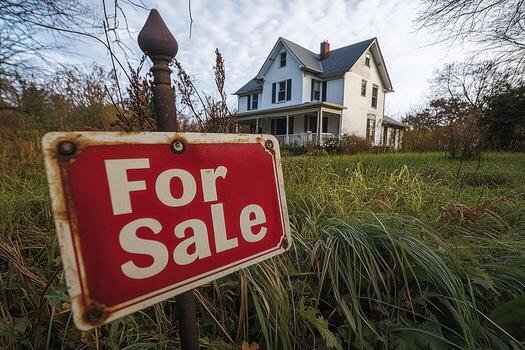
In the Philadelphia suburbs, homes don’t sit unsold because buyers disappeared — they sit because the wrong homes are priced, positioned, or presented incorrectly for today’s market reality. Chester County, the Main Line, and Bucks County have entered a phase where buyers are cautious, selective, and rate-sensitive. Sellers who understand why listings stall can sell quickly and for top dollar. Sellers who don’t often end up chasing the market downward.
This guide breaks down the real reasons listings go stale and exactly how smart sellers avoid the trap.
Table of Contents
The Philly Suburbs Are No Longer a “List It and It Sells” Market
Pricing Errors: The #1 Reason Homes Sit
Condition, Staging, and Buyer Psychology
Mortgage Rates and the Shrinking Buyer Pool
School Districts and Micro-Market Mistakes
Marketing Gaps That Kill Demand
Why Price Reductions Fail (And What Works Instead)
The Smart-Seller Playbook
1. The Philly Suburbs Are No Longer a “List It and It Sells” Market
From 2020 through early 2022, the Philadelphia suburbs experienced one of the most aggressive seller’s markets in history. Homes in West Chester, Radnor, Lower Merion, Doylestown, and Media were often selling within days — sometimes hours — with multiple offers and waived contingencies.
That market is gone.
Today’s market is defined by:
Higher mortgage rates
More inventory
Price-sensitive buyers
Greater scrutiny of condition and value
Buyers still exist, but they are no longer willing to overpay simply to “win.” Every home is now competing against:
New listings
Price-reduced listings
New construction
And the buyer’s ability to rent instead
This means sellers must earn their price — not assume it.
2. Pricing Errors: The #1 Reason Homes Sit
The most common mistake sellers make in the Philly suburbs is pricing based on yesterday’s market instead of today’s.
Here’s what often happens:
A neighbor sold for $750,000 last year
A Zestimate says $765,000
The seller lists at $780,000 “just to see”
But today’s buyers are doing the math differently.
A $750,000 home at 3% interest costs roughly the same monthly payment as a $600,000 home at 7%. That means pricing power has dropped dramatically — even if inventory is still tight.
Overpricing leads to:
Fewer showings
Lower online engagement
Buyer suspicion (“What’s wrong with it?”)
Price reductions that feel like weakness
Smart sellers price to generate urgency, not test optimism.
3. Condition, Staging, and Buyer Psychology
In today’s market, buyers don’t want projects. They want:
Move-in ready homes
Updated kitchens and baths
Clean inspections
Minimal deferred maintenance
When rates are high, buyers feel financially stretched. That makes them emotionally allergic to:
Old roofs
Dated kitchens
Worn flooring
Cluttered spaces
Two homes at the same price will not get the same response if one looks polished and the other looks tired.
In places like the Main Line or Chester County, buyers aren’t just buying square footage — they’re buying a lifestyle image. Staging, lighting, and presentation directly impact perceived value.
4. Mortgage Rates and the Shrinking Buyer Pool
Every 1% increase in mortgage rates reduces a buyer’s purchasing power by about 10%.
That means:
At 6% interest, a buyer might qualify for $800,000
At 7.5%, that same buyer may only qualify for $700,000
This creates invisible price ceilings in every town and school district.
Homes priced above what the monthly payment psychology supports simply stop moving — even if they are “fair” on paper.
5. School Districts and Micro-Market Mistakes
The Philadelphia suburbs are not one market — they are dozens of micro-markets.
A $700,000 home in:
Lower Merion
Radnor
Unionville-Chadds Ford
Tredyffrin-Easttown
is not competing against the same buyers as a $700,000 home in a neighboring district.
Sellers often price based on:
County-wide averages
ZIP code medians
Or outdated sales
But buyers price based on:
School rankings
Commute times
Walkability
Neighborhood reputation
Ignoring micro-market dynamics is a major reason listings stagnate.
6. Marketing Gaps That Kill Demand
Even perfectly priced homes fail if they are poorly marketed.
Modern buyers expect:
Professional photography
Drone footage
Floor plans
Targeted online advertising
MLS optimization
A listing that looks average online will get skipped — even if it’s a great home.
Smart sellers work with agents who treat listings like products, not paperwork.
7. Why Price Reductions Fail (And What Works Instead)
Most price cuts are too small and too late.
Dropping $10,000 on a $750,000 home does not reset buyer perception. It simply signals that the seller is chasing the market.
What actually works:
Strategic pricing from day one
Or a bold, attention-grabbing correction that repositions the home into a new buyer pool
The first 14–21 days on market matter more than any time after.
8. The Smart-Seller Playbook
Homes that sell quickly and for top dollar in the Philly suburbs follow a simple formula:
They are:
Priced for today’s payment-based buyer
Professionally presented
Aggressively marketed
Positioned within the right micro-market
Backed by real data — not hope
This is not a guessing game anymore. It is a strategy game.
And the sellers who understand the rules win.
By Eric Kelley – Realtor & Attorney, serving the philly suburbs