

Relocating from Washington, DC to Chester County, PA
Summary
Relocating from Washington, DC to Chester County, Pennsylvania has become increasingly common among professionals, families, and remote workers seeking more space, strong public schools, and a higher quality of life—without giving up access to major East Coast cities. Chester County offers a rare combination of top-tier school districts, walkable downtowns, historic charm, and commuter connectivity, making it an attractive alternative to Northern Virginia, Montgomery County (MD), and close-in DC suburbs.
This guide is designed to help DC-area buyers understand what makes Chester County unique, how the real estate market differs from the DC metro, and which towns and townships tend to be the best fit for relocating households.
Table of Contents
Why DC Buyers Are Choosing Chester County
How Chester County Compares to the DC Metro
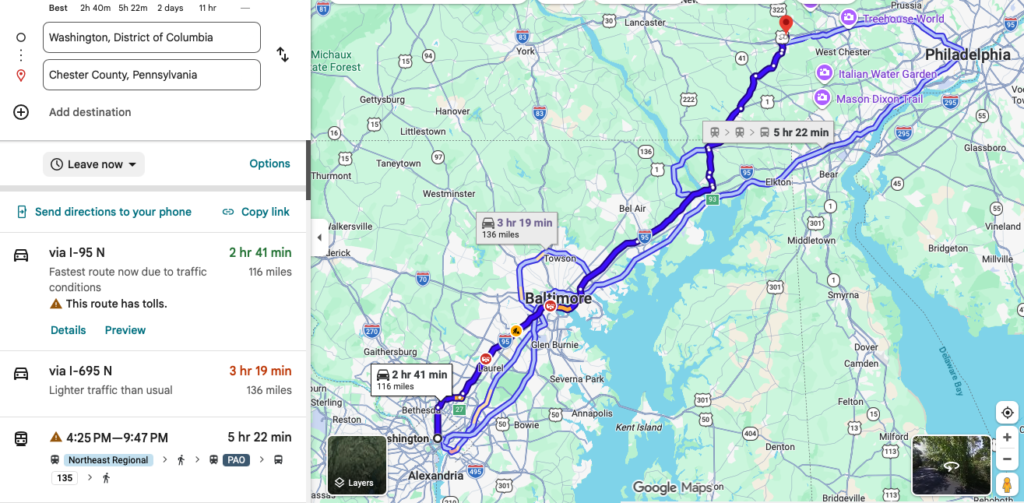
Commute and Connectivity: What to Expect
School Districts That Drive Demand
Popular Chester County Towns for DC Relocators
Housing Stock and Pricing Differences
Lifestyle, Downtowns, and Daily Living
Property Taxes and Cost of Ownership
What DC Buyers Should Know Before Making an Offer
Final Takeaways
1. Why DC Buyers Are Choosing Chester County
Many buyers relocating from Washington, DC cite similar motivations:
Desire for larger homes and lots
Strong public schools without private-school tuition
Lower population density and quieter neighborhoods
More predictable cost of living
Flexibility created by hybrid or remote work
Chester County offers these benefits while still providing access to Philadelphia, New York, and Washington, DC via Amtrak, SEPTA, and major highway corridors.
2. How Chester County Compares to the DC Metro
Buyers coming from DC, Arlington, Bethesda, or Northern Virginia often notice several immediate differences:
More space for the price: Single-family homes with yards are far more common.
School-driven pricing: School districts play a larger role in home values than proximity to a downtown core.
Township-based markets: Chester County real estate is highly localized, with pricing varying significantly by township.
While the DC metro emphasizes proximity to employment hubs, Chester County emphasizes long-term livability and community stability.
3. Commute and Connectivity: What to Expect
Even for buyers who still travel to DC occasionally, Chester County remains practical.
Connectivity highlights include:
Amtrak service from Paoli, Exton, or Downingtown to Washington, DC
SEPTA Regional Rail into Center City Philadelphia
Easy access to Route 202, Route 30, and I-76
Proximity to Philadelphia International Airport
For hybrid professionals, the ability to commute a few days per month—rather than daily—makes Chester County an increasingly viable choice.
4. School Districts That Drive Demand
One of the biggest adjustments for DC-area families is the strength of public school districts in Chester County.
Highly regarded districts include:
Tredyffrin-Easttown (T/E)
Great Valley
West Chester Area
Downingtown Area
Homes within these districts tend to:
Sell faster
Maintain stronger long-term value
Attract competitive interest
For families accustomed to private-school-centric markets in DC, this is often a major advantage.
5. Popular Chester County Towns for DC Relocators
Malvern
Appeals to buyers seeking rail access, a growing borough center, and proximity to employment corridors along Route 202. Malvern balances suburban calm with accessibility.
West Chester
One of the most vibrant suburban downtowns in the region, West Chester attracts buyers who want walkability, dining, and a strong community feel.
Paoli and Berwyn
Offer Main Line-style convenience with quick rail access and strong school districts, often appealing to buyers accustomed to closer-in DC suburbs.
Phoenixville
Known for its lively Bridge Street corridor, Phoenixville attracts buyers seeking culture, nightlife, and trail access—similar to revitalized DC neighborhoods but with more space.
Downingtown
Combines borough charm, rail access, and proximity to parks like Marsh Creek State Park, making it attractive to families and outdoor enthusiasts.
6. Housing Stock and Pricing Differences
DC buyers often find Chester County housing stock more diverse.
Common property types include:
Stone Colonials and historic homes
1980s–2000s suburban neighborhoods
Newer townhomes and planned communities
Renovated borough properties
Compared to DC-area suburbs, buyers typically gain:
Larger lots
More square footage
Easier parking and storage
Pricing varies widely by township, but many DC buyers are surprised by the relative value when comparing lifestyle and space.
7. Lifestyle, Downtowns, and Daily Living
Chester County places a strong emphasis on town centers and local amenities.
Lifestyle highlights include:
Walkable downtowns like West Chester and Phoenixville
Dining destinations such as Andiario (West Chester) and local breweries in Downingtown
Cultural amenities like Longwood Gardens near Kennett Square
Extensive park systems and trail networks
For DC transplants, this often feels like a slower, more intentional pace of life—without sacrificing quality.
8. Property Taxes and Cost of Ownership
Property taxes in Chester County vary by township and school district but are often perceived as more predictable than those in the DC metro area.
Key considerations:
Taxes are influenced heavily by school districts
Reassessments vary by county and timing
Total monthly cost (mortgage + taxes) is the most useful comparison
Many DC buyers find that while taxes can still be substantial, the overall value proposition is compelling.
9. What DC Buyers Should Know Before Making an Offer
Relocating buyers should prepare for several Chester County realities:
Markets are hyper-local—data must be analyzed by township
Pricing strategy matters more than aggressive bidding alone
Renovated homes often command a premium
School district boundaries should be verified carefully
Working with local expertise is essential to avoid overpaying or misunderstanding market dynamics.
10. Final Takeaways
Relocating from Washington, DC to Chester County offers a compelling opportunity to gain space, community, and long-term value—especially for buyers with hybrid or remote flexibility.
Chester County rewards buyers who understand:
Township-level market differences
School district-driven demand
Lifestyle and commute tradeoffs
With the right planning and local insight, many DC buyers find Chester County not just a compromise—but a meaningful upgrade.
Eric Kelley, Philadelphia Suburbs Realtor & Attorney