

How Interest Rate Changes Actually Affect Home Prices
(Not the Way You Think)
Summary
When interest rates rise or fall, headlines often predict dramatic and immediate changes in home prices. Buyers panic. Sellers rush to list. Commentators declare the market “about to crash” or “about to surge.”
In reality, interest rates influence housing markets far more subtly — and unevenly — than most people expect.
In places like the Philadelphia suburbs, rate changes don’t simply push prices up or down. They reshape buyer behavior, shift demand between segments, and widen the gap between desirable and marginal homes.
This article explains how interest rate changes actually affect home prices, why the relationship isn’t linear, and what buyers and sellers should focus on instead of headlines.
Table of Contents
The Common Myth About Rates and Prices
What Interest Rates Really Change: Monthly Payments
Why Prices Don’t Move One-for-One With Rates
The Payment Ceiling: Where Rates Do Matter
Segment Shifts: Who Gets Hurt and Who Doesn’t
Inventory, Not Rates, Often Sets Prices
Why Desirable Homes Still Sell in High-Rate Markets
Buyer Psychology vs. Math
How Sellers Should Price in a Rate-Shift Environment
The Strategic Takeaway
1. The Common Myth About Rates and Prices
The most common assumption sounds logical but is wrong:
“If interest rates go up, home prices must come down.”
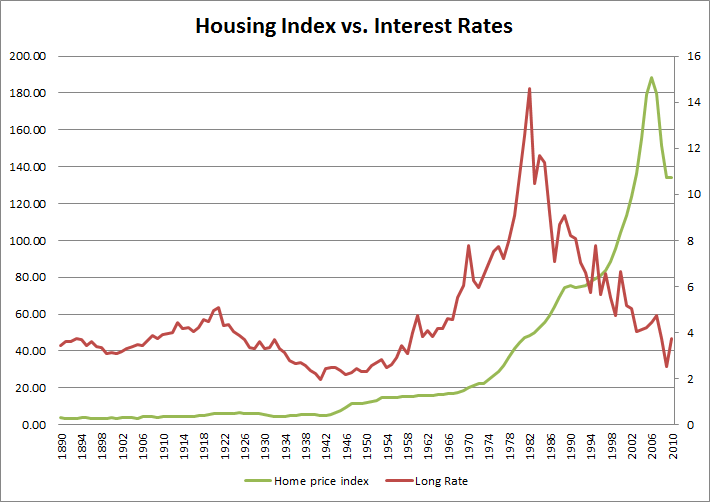
If that were true, housing markets would move in lockstep with rates. They don’t.
Historically, periods of rising rates have included:
Strong price growth
Flat prices
Slowing appreciation
Short-term pullbacks
Rates matter — but they are one variable among many, not a master switch.
2. What Interest Rates Really Change: Monthly Payments
Interest rates don’t directly change home prices. They change monthly affordability.
A higher rate means:
Higher monthly payment for the same purchase price
Tighter qualification thresholds
Increased sensitivity to small price differences
Buyers don’t ask, “What’s the house worth?”
They ask, “Can I live with this payment?”
That distinction is critical.
3. Why Prices Don’t Move One-for-One With Rates
If rates alone determined prices, every rate spike would trigger a crash. That doesn’t happen because:
Many sellers don’t need to sell
Existing homeowners are often locked into low-rate mortgages
Supply remains constrained in many suburbs
Buyers adjust expectations before sellers adjust prices
Instead of prices collapsing, what usually happens first is volume declines — fewer transactions, not lower prices.
4. The Payment Ceiling: Where Rates Do Matter
Rates matter most at the edges of affordability.
When rates rise:
Entry-level buyers feel it first
Stretch buyers fall out of the market
Price-sensitive segments slow
But higher-end, equity-rich, or dual-income buyers often:
Absorb the change
Adjust purchase criteria
Shift neighborhoods rather than exit the market
This is why rate hikes tend to compress the middle, not flatten the entire market.
5. Segment Shifts: Who Gets Hurt and Who Doesn’t
In the Philly suburbs, rate changes don’t affect all homes equally.
More vulnerable segments:
Marginal locations
Overpriced listings
Homes requiring significant work
Suburban sprawl without lifestyle upside
More resilient segments:
Strong school districts
Walkable neighborhoods
Scarce housing types
Homes with efficient layouts and good light
Rates don’t punish markets evenly — they reward selectivity.
6. Inventory, Not Rates, Often Sets Prices
One of the most overlooked dynamics is inventory.
When rates rise:
Fewer homeowners list (they don’t want to give up low rates)
Supply tightens
Buyers compete over fewer homes
This can support prices even as affordability declines.
In many Main Line, Chester County, and Bucks County micro-markets, limited inventory has mattered more than rate fluctuations.
Rates influence demand. Inventory controls outcomes.
7. Why Desirable Homes Still Sell in High-Rate Markets
In higher-rate environments, buyers don’t disappear — they become choosier.
Well-priced homes that offer:
Strong location
Functional layouts
Minimal deferred maintenance
Clear lifestyle value
still sell — often quickly.
What changes is tolerance. Buyers stop “settling” and start comparing harder.
This is why rising rates often expose overpricing rather than eliminate demand.
8. Buyer Psychology vs. Math
Math explains affordability. Psychology explains behavior.
When rates rise:
Buyers slow down
Fear headlines
Second-guess timing
Feel less urgency
This psychological drag can temporarily cool markets even when fundamentals remain strong.
Conversely, falling rates can:
Create urgency
Increase competition
Push buyers to act faster
But psychology fades. Fundamentals endure.
9. How Sellers Should Price in a Rate-Shift Environment
Sellers often make two mistakes when rates move:
Ignoring the impact entirely
Overreacting to headlines
Smart sellers:
Focus on current buyer alternatives
Price for today’s payment reality
Recognize that “aspirational” pricing works less often
Understand that condition and presentation matter more when buyers are cautious
Rates don’t eliminate value — they raise the bar.
10. The Strategic Takeaway
Interest rates influence housing markets — but not the way headlines suggest.
They:
Change monthly payments
Shift buyer psychology
Reduce tolerance for compromise
Increase segmentation
They do not automatically cause price collapses or booms.
In the Philly suburbs, outcomes are driven less by rates alone and more by:
Inventory constraints
School districts
Neighborhood desirability
Home quality and layout
Understanding that distinction helps buyers avoid paralysis and helps sellers avoid mispricing.
Closing Thought
Interest rates are a lens, not a verdict.
They shape how buyers think and how sellers must compete — but they don’t override the fundamentals that make certain homes desirable year after year.
The smartest buyers and sellers don’t chase rate predictions.
They focus on fit, fundamentals, and long-term positioning.
By Eric Kelley, Philadelphia Suburbs Realtor & Attorney