

Doylestown Real Estate Market:
Pricing, Schools, and Downtown Appeal
Summary
Doylestown, Pennsylvania has long been one of Bucks County’s most recognizable and desirable markets. In 2026, its appeal remains rooted in three core fundamentals: pricing stability, strong school districts, and a true downtown lifestyle that few suburban towns can replicate.
Doylestown attracts a wide range of buyers — from families and professionals to NYC and Philadelphia relocators — all drawn by its walkable core, cultural amenities, and long-term resale confidence. This guide breaks down home pricing trends, school considerations, and what really drives demand in Doylestown, so buyers and sellers can make informed, strategic decisions.
Table of Contents
Why Doylestown Continues to Stand Out in Bucks County
Housing Stock and Neighborhood Character
Doylestown Pricing Trends and Market Dynamics
School Districts and Their Impact on Demand
Downtown Doylestown: Walkability and Lifestyle
Commuting and Regional Access
Who Doylestown Is Best For
Common Buyer Mistakes in the Doylestown Market
What This Means for Buyers in 2026
What This Means for Sellers in 2026
Final Takeaways: Is Doylestown the Right Fit?
1. Why Doylestown Continues to Stand Out in Bucks County
Doylestown functions as both a county seat and a lifestyle destination, which gives it a level of prominence that many suburbs lack. Unlike bedroom communities that rely solely on proximity to employment centers, Doylestown generates its own demand through:
A vibrant downtown with restaurants, shops, and culture
Strong public schools
Historic charm paired with modern conveniences
A buyer pool that extends beyond Bucks County
This combination creates durable demand, even during broader market slowdowns.
2. Housing Stock and Neighborhood Character
Doylestown’s housing stock is diverse, but it skews toward older, character-driven homes, especially closer to downtown.
Buyers will encounter:
Historic colonials and Victorians near the borough core
Mid-century and late-20th-century single-family homes
Townhomes and smaller developments on the outskirts
Limited new construction within walking distance of downtown
Inventory is constrained near the center of town, which tends to support pricing and faster absorption for well-located homes.
3. Doylestown Pricing Trends and Market Dynamics
In 2026, Doylestown pricing reflects steady demand rather than volatility.
Key pricing patterns include:
Strong price-per-square-foot metrics near downtown
Premiums for updated homes with walkability
Slower movement for homes that are overpriced or poorly maintained
Unlike rapidly expanding suburbs, Doylestown’s limited supply and established reputation help insulate it from dramatic swings. Buyers often pay a premium for location, while sellers benefit from consistent interest — provided pricing is realistic.
4. School Districts and Their Impact on Demand
School quality is a major driver of Doylestown’s appeal. Most borough homes fall within the Central Bucks School District, which is among the most sought-after districts in the region.
School-driven demand results in:
Broader buyer pools
Strong family interest
Better long-term resale confidence
Buyers should pay close attention to exact school assignments, especially near district boundaries, as these can meaningfully affect value and buyer competition.
5. Downtown Doylestown: Walkability and Lifestyle
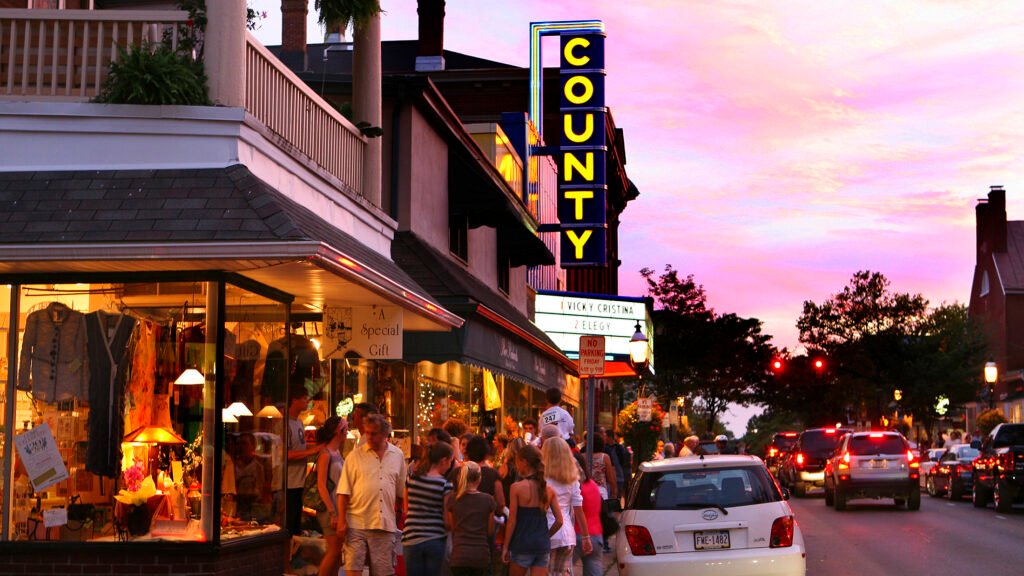
Downtown Doylestown is one of the strongest lifestyle differentiators in Bucks County.
Highlights include:
Locally owned restaurants, cafes, and boutiques
Cultural institutions and community events
A walkable grid that supports daily errands without driving
For buyers relocating from urban environments, this walkability is often the deciding factor. Homes within walking distance of downtown tend to command premiums and experience faster days on market.
6. Commuting and Regional Access
While Doylestown is not the closest suburb to Philadelphia, its transportation options still support commuter and hybrid lifestyles.
Key considerations:
Regional rail service into Center City Philadelphia
Access to major roadways for Bucks County and Montgomery County commuting
Viable hybrid commuting patterns for NYC and Philadelphia professionals
Buyers who commute daily should factor in travel times carefully, but many residents accept slightly longer commutes in exchange for lifestyle quality.
7. Who Doylestown Is Best For
Doylestown tends to be a strong fit for buyers who:
Value walkability and downtown living
Want strong public schools
Appreciate historic character
Plan to own long-term
It is especially popular with families, professionals, and relocators seeking a town-centered suburban experience rather than a purely residential subdivision.
8. Common Buyer Mistakes in the Doylestown Market
Some common missteps include:
Underestimating renovation costs in older homes
Overpaying for square footage while ignoring location
Assuming all Doylestown addresses offer the same lifestyle
Overlooking school boundary nuances
Successful buyers focus on micro-location, not just the town name.
9. What This Means for Buyers in 2026
Buyers in Doylestown should:
Be prepared for competition near downtown
Evaluate condition carefully, especially in historic homes
Understand school district boundaries before making offers
Focus on long-term fit rather than short-term pricing noise
In 2026’s more analytical market, preparation matters more than speed.
10. What This Means for Sellers in 2026
Sellers benefit from:
A well-defined buyer pool
Strong school-driven demand
Lifestyle appeal that markets well
However, overpricing remains the biggest risk. Homes priced accurately from day one — especially those near downtown — tend to sell faster and closer to list price than those that “test the market.”
11. Final Takeaways: Is Doylestown the Right Fit?
Doylestown remains one of Bucks County’s most resilient and desirable markets because it offers something many suburbs cannot: a real downtown paired with strong schools and long-term stability.
For buyers and sellers alike, success in Doylestown comes from understanding not just the market averages, but the street-by-street nuances that drive demand and value.
By Eric Kelley, Philadelphia Suburbs Realtor & Attorney